Unbox Me, Darling: Britain's Quiet Obsession with Packaging It Can't Bear to Bin
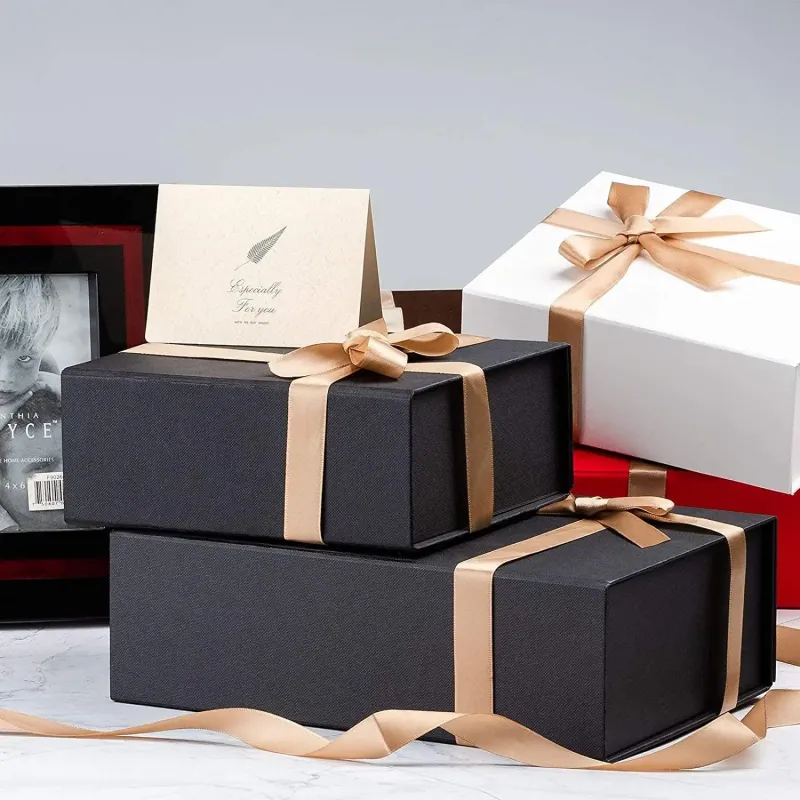
Photo: luxury product unboxing premium packaging gift box opening, via richpkg.com
Unbox Me, Darling: Britain's Quiet Obsession with Packaging It Can't Bear to Bin
Let us begin with a confession that approximately 34 million British adults could make, if they were being honest, which they are not. Under a bed — possibly yours — there is an Apple box. It is white. It is satisfyingly dense. The corners are perfect. It contains nothing except, perhaps, a cable that doesn't fit anything you currently own and a small envelope of instructions in seventeen languages. You have not opened this box in four years. You cannot throw it away.
You are not alone. You are, in fact, part of the most quietly irrational consumer behaviour in modern Britain: the keeping of packaging so beautiful, so considered, so architectural in its construction, that discarding it feels like a small act of cultural vandalism.
The product has been used. The box remains. The box, in some ways, is the point.
The Theatre of Arrival
Unboxing — the act of opening a package with the deliberate, almost ceremonial slowness of someone defusing a very tasteful bomb — is now one of YouTube's most-watched content categories. In the UK alone, unboxing videos generate hundreds of millions of views annually. People watch other people open things. They watch it for pleasure. They watch it instead of opening their own things, which is a level of consumer abstraction that would have baffled anyone born before 1980.
But the unboxing video is only the most visible symptom of a much older affliction. Britain has always loved a good container. The biscuit tin repurposed as a sewing box. The Quality Street tin that becomes, by Boxing Day, a vessel for buttons, batteries, and the accumulated small mysteries of domestic life. The Fortnum & Mason hamper basket that lives in the cupboard under the stairs for eleven months of the year, waiting to be useful again.
What's changed is that brands have noticed. And having noticed, they have invested.
The Container Is the Product
Apple did not invent premium packaging, but they did something arguably more impressive: they made the experience of opening a box feel like the logical conclusion of owning an expensive object. The magnetic lid. The slow, pneumatic descent of the inner tray. The particular resistance — engineered, tested, refined over decades — of pulling the outer sleeve from the box. These are not accidents of manufacturing. These are choreography.
Luxury brands have operated this way for centuries, of course. The Hermès orange box. The Tiffany blue. The Chanel black with the white ribbon. The container has always been part of the message for goods at the very top of the market. What's new is the democratisation of this principle — the idea that a £35 candle, a £12 bar of chocolate, or a £28 moisturiser might arrive in packaging so considered that throwing it away feels actively wrong.
Retailers call this 'the unboxing experience.' Consumer psychologists call it 'extended product value.' The rest of us call it 'the reason I have a drawer full of tins I cannot explain.'
The Drawer of Beautiful Uselessness
Every British home above a certain income threshold contains what interior designers have started calling, without a trace of irony, 'the beautiful drawer.' It holds: three Diptyque candle vessels (too pretty to bin, too small to reuse meaningfully), a Fortnum's tea tin containing seventeen rubber bands and a 2019 bus ticket, two Aesop boxes in matte black, the cloth bag from a pair of sunglasses purchased in 2021, and the wooden presentation box from a whisky gifted at Christmas by someone who wanted to look impressive.
None of these items serve any function. All of them are, in their original context, simply the containers that other things came in. And yet here they are, curated, kept, occasionally dusted, living their best second life as objects of vague domestic pride.
The market has responded to this behaviour with characteristic British efficiency: it has begun selling things specifically designed to be kept. The refillable perfume bottle. The reusable candle vessel with a 'refill programme.' The subscription box designed so that the outer packaging 'doubles as storage.' This is the logical endpoint of premium packaging — the container so good that the product inside becomes, in some sense, the free gift.
Cardboard Relics and the Resale Question
There is, it should be noted, a rational argument for keeping certain boxes. The Apple box under the bed is not entirely sentimental — it adds resale value. A second-hand iPhone sold with its original box commands, on average, 15-20% more than one sold without. The box is, technically, an asset. A small, white, perfectly engineered asset that lives under your bed for three years and then briefly justifies its existence at the point of sale before its new owner also fails to throw it away.
This has created an entire secondary economy in packaging. eBay listings for empty luxury packaging — Chanel boxes, Selfridges bags, John Lewis gift wrap — attract genuine bidders. A pristine Rolex box with papers sells for hundreds of pounds independently of any watch. At the very top end of the market, the packaging has become a collectible in its own right, which raises a philosophical question that brands are presumably delighted to leave unanswered: are people buying the watch, or are they buying the box that the watch comes in?
The Guilt-Free Bin
For all the attachment, there is an equal and opposite British anxiety: the guilt of wanting to throw the packaging away. Because premium packaging is, almost by definition, not recyclable in any straightforward sense. The magnetic box. The foil-lined paper. The tissue paper in three different weights. The velvet bag. The branded ribbon. The insert card printed on something that feels expensive but definitely isn't cardboard.
Brands are beginning to respond to this — sustainable packaging has become a genuine marketing differentiator — but the shift is slow, and the tension remains. We buy the beautiful box. We cannot use it. We cannot throw it away. We feel vaguely guilty about all three of these things simultaneously, which is a very British emotional state and one that, conveniently, another beautiful purchase can temporarily resolve.
The Box Was Always the Point
The honest truth, which packaging designers will tell you over a drink if you ask them directly, is that the box is not a vehicle for the product. The product is, increasingly, a vehicle for the box. The experience of receiving something — the weight, the texture, the sound of the tissue paper, the slow reveal — is what justifies the price premium, sustains the brand relationship, and generates the social media content that no advertising budget could otherwise buy.
We are not buying candles. We are buying the moment of opening them.
We are not buying phones. We are buying the particular satisfaction of sliding that white sleeve off that white box in that very specific, pneumatic way.
And then we are putting the box under the bed, where it will live, pristine and purposeless, until we move house and are forced to confront the full archaeological record of everything we've ever wanted.
At which point we will probably keep the boxes anyway.
They're too nice to throw away.