Going Down, Feeling Good: The Middle-Class Art of Spending Less and Loving It
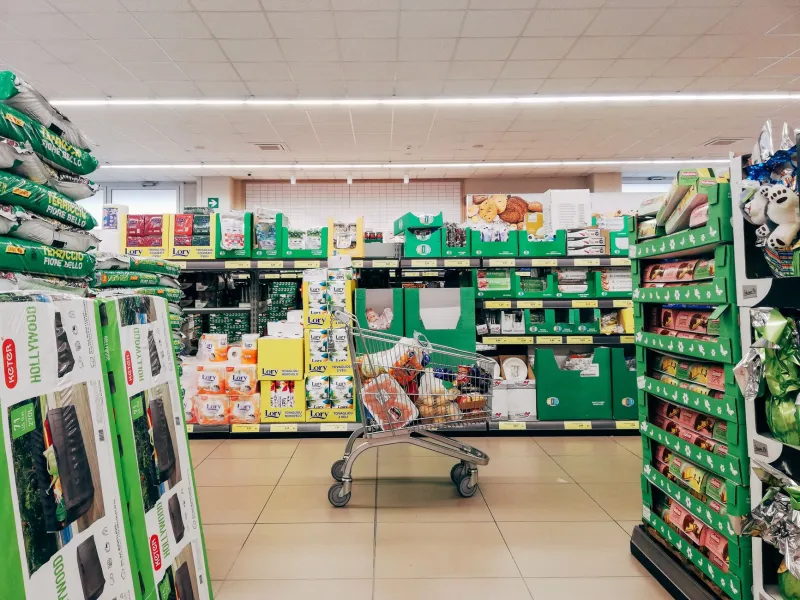
Something quietly radical is happening in Britain's supermarket car parks. There are Volvos outside the Aldi. There are people who own second homes queuing at Lidl with a look of concentrated moral satisfaction on their faces. There are former Ocado subscribers — Ocado subscribers — standing in front of a wall of own-brand pasta and thinking: you know what, this is fine. This is actually fine.
The downgrade has arrived. And it has brought, unexpectedly, its own particular form of smugness.
The Anatomy of the Conscious Downgrader
First, let's distinguish between types of spending less. There is having to spend less — the austerity of necessity, the joyless arithmetic of a squeezed household budget. This is not that. The conscious downgrader is not struggling. They are choosing. They have looked at the premium option, the organic option, the artisan option, and decided — with full information and complete voluntarism — to go for the one that costs £2.40 less and tastes, if they're honest, basically the same.
This person exists in growing numbers across Britain's middle classes. They are, statistically, more likely to be in their thirties and forties. They probably have a pension they actually contribute to. They've read at least one book about minimalism, possibly by a Japanese person, and it made a significant impression. They refer to Aldi's middle aisle as 'the treasure aisle' with a tone that suggests they find this funnier than you do.
They are, in short, a new kind of consumer — and they are confusing the living daylights out of the marketing industry.
The Great Waitrose Defection
Waitrose has, for a generation, functioned as less a supermarket and more a social contract. You shop at Waitrose because you are the kind of person who shops at Waitrose. The slightly higher price points aren't just paying for slightly nicer packaging — they're paying for a self-image. The Waitrose carrier bag (back when there were carrier bags) was a signal, legible to anyone who saw it, that you had arrived at a certain postcode of life.
Which makes the defection of its traditional customer base to Aldi and Lidl one of the more psychologically interesting retail stories of recent years. These aren't people who can't afford Waitrose. These are people who've decided that the premium is no longer worth the premium — or, more precisely, that they'd rather bank the difference and feel clever about it.
The German discounters understood this opportunity with ruthless clarity. Aldi's branding has gradually shifted from 'budget option' to 'the rational choice of intelligent people.' Its award-winning wines, its Specialbuys collaborations with recognisable names, its consistent Which? recommendations — all of it has been carefully engineered to make the downgrade feel like an upgrade in disguise. You're not spending less. You're spending smarter. The distinction matters enormously.
Premium Economy and the New Hierarchy of Almost
The phenomenon extends far beyond groceries. British Airways and Virgin Atlantic have both noted the migration of passengers from business class to premium economy — not because those passengers can't afford the front cabin, but because they've done the maths and found it unconvincing. Premium economy, once the embarrassing middle ground nobody admitted to choosing, has been rehabilitated into a category that practically-minded, unsentimental people choose on purpose.
This reframing is everything. The business class passenger who moves back a few rows isn't downgrading — they're refusing to pay for a flat bed they'll sleep through anyway and a champagne they'll only drink to justify the ticket. They are, in their own telling, exercising judgment. The seat is almost as good. The saving is not almost as large — it is large.
Similar logic is being applied across the spending landscape. Meal kit subscriptions are being cancelled in favour of actual cooking. Gym memberships are being replaced by running, which remains stubbornly free. Branded paracetamol — the last great triumph of marketing over chemistry — is finally losing ground to the own-brand version that is, in the most literal pharmaceutical sense, identical.
Is This Wisdom, Identity, or Dressed-Up Deprivation?
Here is where it gets complicated. Because the conscious downgrade, examined closely, has all the hallmarks of a new aspirational identity rather than a departure from aspiration altogether.
The person who announces at a dinner party that they've switched to Aldi and honestly can't taste the difference is not simply reporting a shopping decision. They are performing a self-concept: the rational, unsentimental, financially literate person who is above the status games of consumer culture. Which is, of course, itself a status game. Just one with a different uniform.
The minimalism movement — from which conscious downgrading borrows heavily — has always had this quality. The person who owns fewer things is making a claim about their relationship to ownership, and that claim is implicitly comparative. I have fewer things than you, and I am at peace with this, which makes me more evolved than you. The capsule wardrobe is still a wardrobe. The intentional purchase is still a purchase. The aesthetic of restraint is still an aesthetic.
This doesn't make conscious downgrading cynical or fraudulent. People are genuinely spending less and genuinely finding satisfaction in it. The cost of living crisis has accelerated a reassessment that was probably overdue. But it's worth noting that the story Britain's downgraders tell about their choices — I chose this — is doing a lot of emotional heavy lifting.
What Brands Should Probably Worry About
The real disruption here isn't to supermarkets or airlines. It's to the entire premise that premium positioning is self-sustaining. For decades, the logic held: quality signals justified price premiums, price premiums reinforced quality signals, and the consumer bought the story as readily as the product.
Conscious downgraders have broken that loop. They've discovered — through experiment, through necessity, through sheer bloody-minded curiosity — that a significant number of premium products cannot justify their premium on quality alone. The premium was, in many cases, primarily narrative. And once you've spotted the narrative, it's very hard to un-spot it.
This is either a crisis for aspirational retail or an opportunity, depending entirely on which end of the velvet rope you're standing. For the brands that have been coasting on positioning rather than product, the downgrade movement is an audit they didn't ask for.
For everyone else, it's a Lidl croissant that is, hand on heart, genuinely rather good.
And that, perhaps, is the most radical finding of all.