Wrapped in Good Intentions: The Hidden Economy of Britain's Unwanted Gifts
Wrapped in Good Intentions: The Hidden Economy of Britain's Unwanted Gifts
Somewhere in Britain right now, there is a scented candle that smells of something called "Nordic Frost" sitting in its original packaging in a kitchen cupboard, waiting. It was given with love. It was received with a smile so convincing it deserves recognition at the highest levels of the performing arts. It will never be lit. Within six months, it will be on Facebook Marketplace for £4, listed as "unwanted gift, never used, buyer collects."
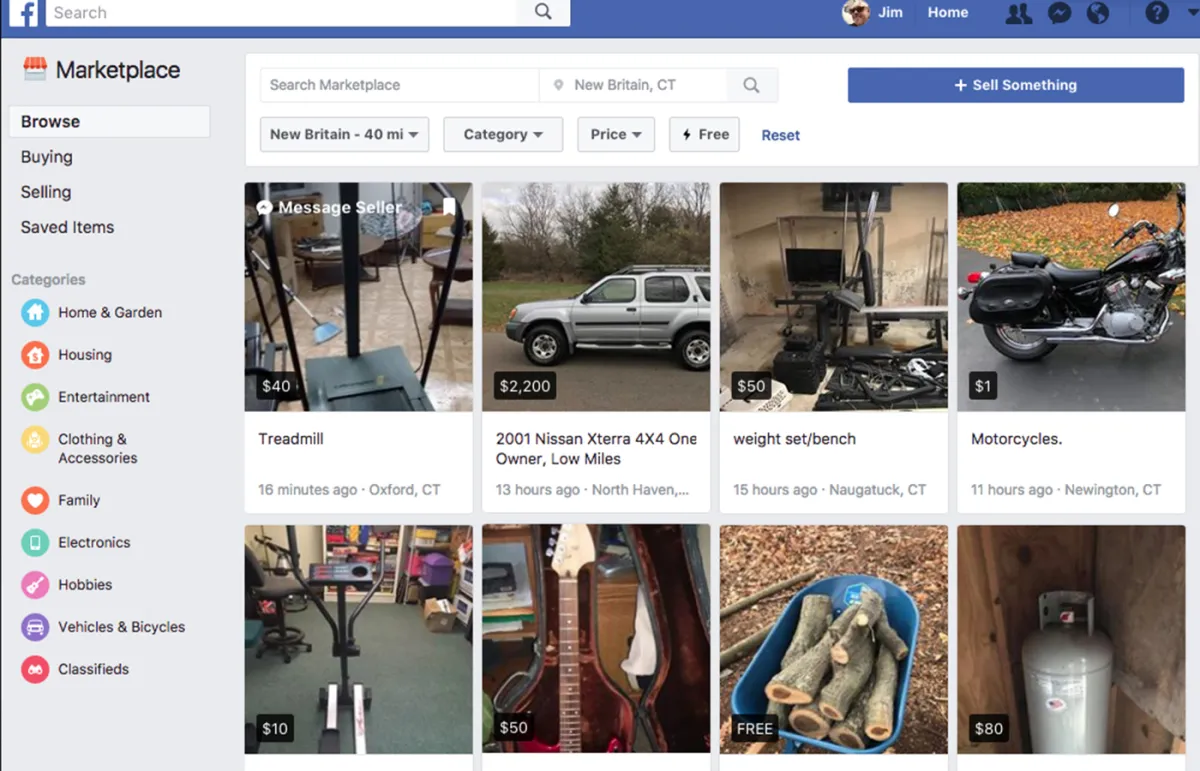 Photo: Facebook Marketplace, via www.experian.com
This is not a tragedy. It is, in its own way, a perfectly functioning system.
The January Migration
The week after Christmas is when Britain's shadow gift economy springs into life with the quiet efficiency of a well-drilled logistics operation. Car boot sales fill with pristine boxed items. Charity shops receive donations still bearing gift tags. Facebook Marketplace listings multiply overnight, the photographs taken with a particular combination of speed and mild shame — slightly blurred, ambient lighting, no faces.
The scale of this redistribution is genuinely staggering. Estimates suggest that British consumers receive somewhere in the region of £700 million worth of gifts each year that they neither want nor will ever use. This figure is almost certainly an undercount, because it relies on people accurately reporting their own ingratitude, which is not something the British are historically forthcoming about.
The unwanted gift moves through several distinct phases. First, there is the display period — a socially mandated interval during which the gift must remain visible in the home in case the giver visits. Then comes the gradual relocation: from living room to spare bedroom to the cupboard under the stairs. Finally, liberation. The gift re-enters the world, usually at about 40% of its retail value, to begin a second life with someone who actually wanted it.
The Gap Between Love and Knowledge
The interesting question is not why we receive gifts we don't want. The interesting question is why the people who love us most are sometimes the worst at buying for us.
There's a theory in consumer psychology that people buy gifts that reflect their own preferences more than their recipient's — a phenomenon sometimes called egocentric gift-giving. Your dad buys you a book about military history because he finds military history fascinating. Your aunt buys you a scented candle because she believes scented candles are a universally acceptable gift, which is true in the same way that beige is a universally acceptable wall colour: technically correct, emotionally insufficient.
But there's something more interesting happening beneath the egocentric gifting. Gifts are acts of interpretation. When someone buys you something, they are making a statement about who they believe you to be. The problem is that their version of you is often slightly out of date — fixed at some point in the past when a preference was expressed or a casual comment was made that has since been filed under "things they definitely still like."
The person who buys you a gardening kit because you mentioned the garden once in 2019 is not failing to know you. They're knowing a slightly earlier version of you, preserved in amber, trowel in hand.
The Regifting Industrial Complex
Regifting — the practice of passing an unwanted gift directly to a new recipient — is one of Britain's most energetically denied social behaviours. Surveys consistently show that a significant proportion of people have done it. A much smaller proportion will admit it. The gap between those two figures is where British social performance lives.
The rules of regifting are unwritten but universally understood. You cannot regift within the same social circle. You must remove all evidence of original gifting, including but not limited to: gift tags, personalised notes, and any packaging that has been written on in marker pen. You should allow a cooling-off period of at least six months, ideally a calendar year. And you must, under all circumstances, be prepared to look someone in the eye and say you chose this specifically for them.
The office Secret Santa has become the primary regifting channel for items that are too impersonal to give to a friend but too new to donate to a charity shop. The white elephant gift exchange — in which everyone brings a wrapped unknown item and the results are revealed communally — is essentially a formalised regifting ceremony, stripped of pretence and elevated to entertainment. It is, arguably, the most honest gift-giving format Britain has yet devised.
What the Unwanted Gift Is Actually Saying
There's a reading of the unwanted gift that goes beyond comedy and into something more genuinely revealing. Every misfire — every Nordic Frost candle, every novelty kitchen gadget, every book about a subject you've never mentioned — is a data point in the ongoing project of being known by other people.
We spend our whole lives trying to communicate who we are. We curate our homes, our wardrobes, our social media presences, our conversational selves. And then Christmas comes, and someone hands us a wrapped object that says, quietly but clearly: this is who I think you are. And sometimes it's right, and you feel seen in the specific way that only a well-chosen gift can achieve. And sometimes it's wrong, and you smile, and you put it in the cupboard, and eventually it goes on Facebook Marketplace.
Neither outcome is a failure of love. Both are evidence of the fundamental difficulty of actually knowing another person — of keeping up with who they're becoming rather than who they were.
The Second-Hand Gift and Its Complicated Virtue
The items that emerge from the January redistribution often end up in genuinely better homes. The Nordic Frost candle, listed on Marketplace for £4, is purchased by someone who specifically searched for it, who burns it immediately and finds it unexpectedly pleasant, who leaves a five-star review for the seller.
In this sense, the unwanted gift economy is quietly efficient. It moves objects from people who don't want them to people who do, at a price point that acknowledges the transaction's slightly awkward origins. The charity shop version is even more virtuous — a gift that nobody needed becomes a donation that actually helps something.
The only loser in the system is the fiction that we all know each other perfectly, that love translates cleanly into knowledge, that the right present is always findable if you care enough. It isn't, and it doesn't, and that's fine. The gap between who we are and who we appear to be is not a failure of relationship. It's just the normal condition of being a person.
The candle, meanwhile, smells of something called Nordic Frost. Which turns out to be pine, mostly, with a hint of something synthetic. Someone, somewhere, is burning it right now and thinking it's exactly what they wanted.
They're not wrong. They just needed to find it on Facebook Marketplace first.