Almost Famous: The Glorious Rise of Britain's Guilt-Free Knock-Off Culture
Almost Famous: The Glorious Rise of Britain's Guilt-Free Knock-Off Culture
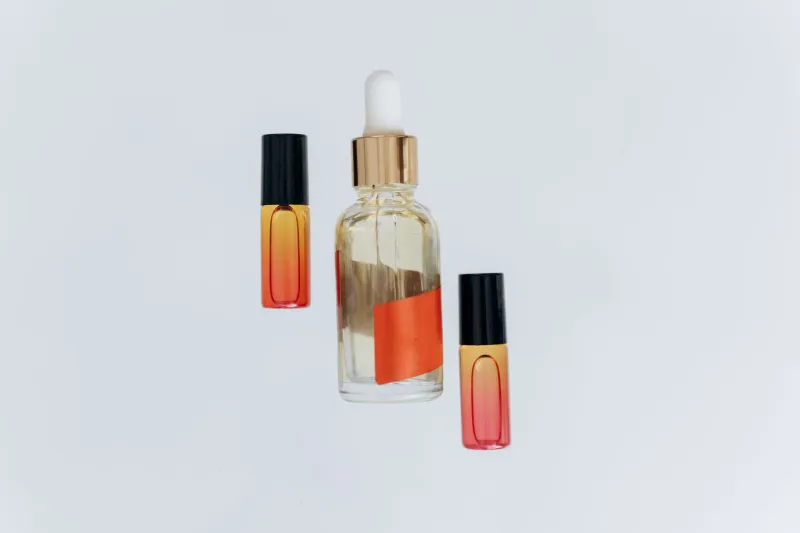
There's a bottle of perfume sitting on roughly 4.3 million British bathroom shelves right now. It smells, by most accounts, almost exactly like a certain Parisian fragrance that costs £140 for 50ml. The bottle on those shelves cost £7.99 from Aldi. The people who own it are not embarrassed. They are, in fact, quite smug about it.
Welcome to the dupe economy — Britain's fastest-growing shopping movement that nobody officially started, nobody officially leads, and absolutely everybody is quietly participating in.
The Shame Swap
For decades, buying a knock-off carried a specific social weight. The fake Rolex bought from a bloke in Benidorm. The 'inspired by' handbag that fooled nobody. Imitation was flattery with an asterisk — a confession that you wanted something you couldn't quite afford, and had settled.
Something shifted around 2019, accelerated violently by a cost-of-living crisis that made the original version of almost everything feel like an act of financial self-harm. The language changed first. 'Knock-off' became 'dupe'. 'Fake' became 'alternative'. 'Cheap imitation' became 'budget find'. And with the language came a wholesale reframing of what the purchase actually meant.
Buying a dupe is no longer about not being able to afford the real thing. It's about being too clever to bother.
The TikTok Legitimisation Machine
No cultural shift this significant happens without a platform to amplify it, and TikTok's #dupe hashtag — which has accumulated billions of views globally — did something remarkable: it turned product substitution into a competitive sport.
The format is always roughly the same. A creator holds up the expensive original. Dramatic pause. Then the dupe, side by side. 'Tell me the difference,' they say. And you can't. The comments erupt. The dupe sells out within 48 hours. Aldi's Lacura skincare range, Lidl's trainers, Primark's PS... beauty line — all have experienced the particular chaos of going viral for being almost-but-not-quite something much more expensive.
What TikTok understood, perhaps better than the brands themselves, is that the dupe reveal is inherently theatrical. It's a performance of savvy. A flex disguised as frugality. You're not buying the cheap thing because you're skint. You're buying it because you saw through the con.
What You're Actually Paying For
Here's the uncomfortable truth that the dupe economy has made impossible to ignore: a significant portion of what you pay for a luxury product is the story of the product. The heritage. The logo. The very specific feeling of handing over £380 for a moisturiser and telling yourself it's an investment.
Dupe culture is, at its core, a philosophical position. It says: I want the function of this thing, not the mythology. I'll take the scent without the Champs-Élysées backstory, thank you. I'll have the cushion-soled trainer without the celebrity endorsement baked into the price.
 Photo: Champs-Élysées, via www.franciaturismo.net
This is not, it should be noted, an entirely new idea. Own-label supermarket products have existed for decades on precisely this premise. What's changed is the status of the choice. Buying Tesco's own-brand baked beans was never a flex. Buying the Zara version of a Totême coat and posting a side-by-side comparison definitely is.
The Brands' Awkward Position
Luxury and premium brands are caught in a genuinely difficult position here. Acknowledging dupes legitimises them. Ignoring them allows them to flourish. Legal action tends to backfire spectacularly — nothing sends a product viral faster than a cease-and-desist from a famous fashion house.
Some brands have attempted to lean into authenticity as a counter-argument. The craftsmanship narrative. The 'cost per wear' calculation. The sustainability angle (fast fashion dupes, the argument goes, are an environmental disaster dressed up as thrift). These are not entirely without merit, but they've struggled to land with a generation that watched their energy bills double and their rent increase by a third.
Others have quietly begun competing on the dupe's own terms — launching more accessible diffusion lines, creating 'inspired by' products within their own portfolio. If you can't beat the dupe economy, apparently, you join it.
The Authenticity Paradox
There's a delicious irony threading through all of this. The dupe economy, for all its rejection of brand mythology, has created its own mythology. The best dupe is now a status symbol. Knowing which Lidl moisturiser approximates the La Mer you can't justify is cultural capital. Finding the M&S dress that's 'basically the same' as the Reformation one is a skill worth broadcasting.
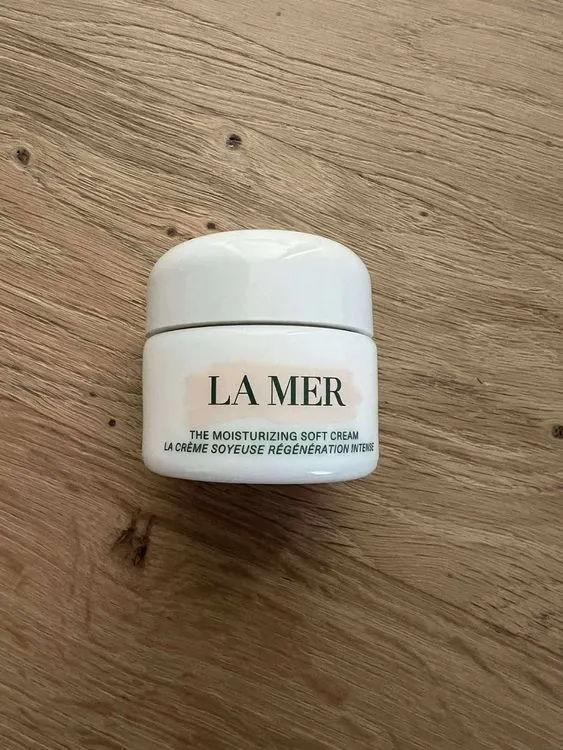 Photo: La Mer, via img.ricardostatic.ch
We haven't escaped aspiration. We've just redirected it. The aspiration now is to be the person who knows. The one who found it first. The one who spent £12 and got the same result as the person who spent £120, and has the receipts — metaphorically and literally — to prove it.
Britain has always had a complicated relationship with money and class, with wanting things and admitting to wanting them. The dupe economy feels like a very British resolution to that tension: desire the expensive thing, buy the affordable version, and somehow make the gap between the two into the whole point.
The knock-off, it turns out, wasn't the compromise. It was the punchline all along.