Still Life With Price Tag: The British Art of Buying Things You'll Never Actually Touch
There is a bottle of expensive French mineral water on a shelf in a flat in Peckham. It has been there for fourteen months. It is not being saved for a special occasion. It is not particularly good water. It is there because the label is a very specific shade of sage green that ties the whole kitchen together.
This is not unusual. This is, in fact, the defining consumer behaviour of our current moment.
Somewhere between the rise of interiors accounts and the mainstreaming of 'aesthetic' as a noun, a significant portion of British shopping quietly detached itself from the concept of use. Things are no longer simply bought to be used. They are bought to be composed.
The Object That Must Not Be Touched
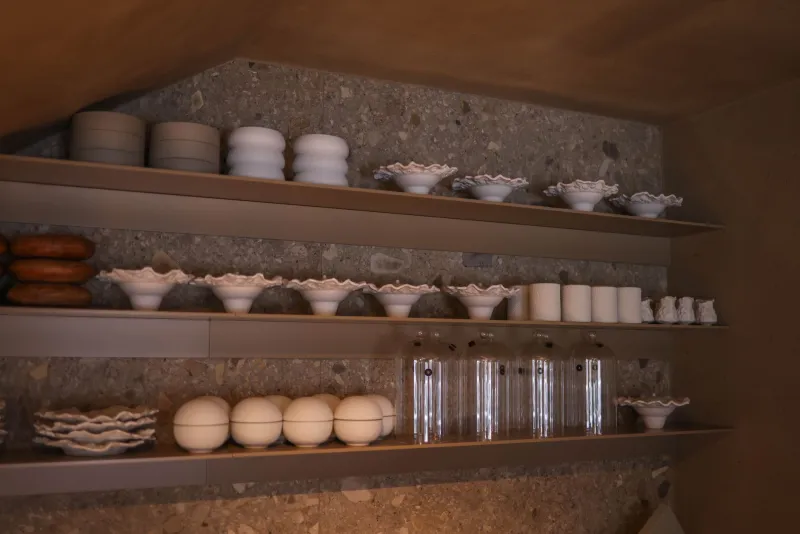
The aspiration shelf — and almost every British home now has one, whether or not its owner would admit it — is a curated collection of objects whose primary function is visual. A ceramic bowl containing one perfect lemon. A stack of hardback books arranged by spine colour. A reed diffuser that hasn't been touched since the reeds were first fanned out with theatrical care in January.
The interesting thing is not that these objects exist. Decorative objects have always existed. The interesting thing is what they've replaced: the practical item, now hidden in a cupboard because it is ugly, in favour of a more photogenic version that will never actually be pressed into service.
Consider the kettle situation. Britain, a nation that boils water approximately eleven times a day per household, has developed a parallel market for kettles that are bought not for their boiling capabilities but for their colour. Sage green. Dusty rose. Matte black. These kettles sit on worktops and are photographed from above and captioned 'slow mornings' on Instagram, while the actual kettle — a reliable if aesthetically unfortunate Breville from 2019 — lives under the sink and does all the actual boiling.
We are, in short, running a shadow economy of display appliances.
The Packaging Problem
Then there is the box question. The original packaging, once a thing to be broken down and put in the recycling with mild guilt, has become a prop in its own right. There are people — you may know some of them, you may be one of them — who keep boxes not because they intend to return the product, but because the box looks good on a shelf. The matte card. The foil lettering. The tissue paper that rustles satisfyingly.
Unboxing content on social media has done something genuinely strange to the British relationship with packaging. It has made the container as desirable as the contents. Which means that the moment the object is removed and used, something is lost. The pristine state has been violated. The narrative is over.
This explains, in part, why so many expensive skincare products sit at 90% full on bathroom shelves. Not because they don't work. Not because they're being saved. But because the bottle is beautiful, and using it means it will eventually be empty, and then what?
Arranged for an Audience That Isn't There
Here is where it gets genuinely fascinating: a substantial proportion of this arrangement, this curation, this careful positioning of the olive oil at a forty-five degree angle to catch the afternoon light — it is done for photographs that are never taken.
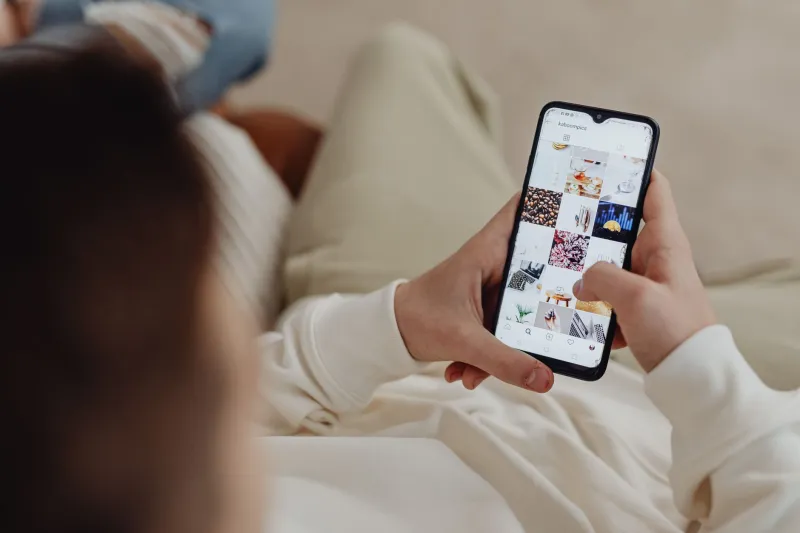
People are styling their homes for a social media post that exists only as a vague intention. The flat is permanently in a state of being-about-to-be-photographed. The scatter cushions are plumped not because a guest is coming but because at some point, someone might want to take a picture, and it is better to be ready.
This is the aspiration shelf's deepest function: it holds the life you mean to be living, arranged in a way that proves you're living it, ready to be documented at a moment's notice. The fact that the moment never comes is almost beside the point.
Want Without Function
None of this is entirely irrational, which is what makes it so interesting. There is genuine pleasure in a well-arranged surface. There is real satisfaction in owning something beautiful. The psychology of display — of using objects to communicate identity, taste, and status — is as old as the mantelpiece.
What's new is the scale of the investment, and the completeness of the separation between wanting and using. The aspiration shelf is not a compromise between beauty and function. It is a full abandonment of function in favour of something that looks, from certain angles and in certain lights, exactly like having your life together.
Which is, when you think about it, a very reasonable thing to want. Even if the kettle under the sink is doing all the actual work.