Punished for Showing Up: The Brutal Maths of Britain's Most Loyal Customers
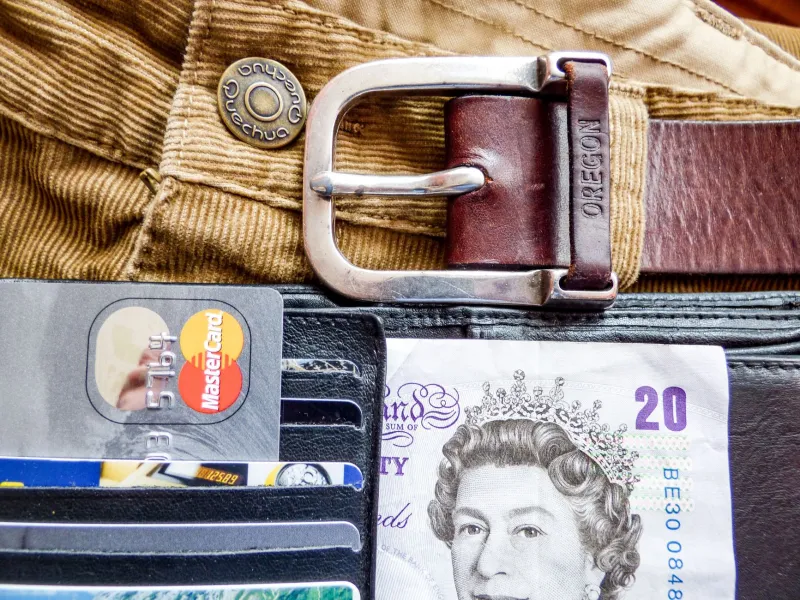
Punished for Showing Up: The Brutal Maths of Britain's Most Loyal Customers
Somewhere in Britain right now, a person is paying £67 a month for broadband. Their neighbour, having just switched from the exact same provider, is paying £24. They are receiving an identical service. They are eating the same pixels. And yet one of them is, by any reasonable measure, being financially penalised for the crime of not being a stranger.
Welcome to the loyalty paradox — the quietly spectacular con at the heart of British consumer life, where devotion is punished, inertia is monetised, and the very act of trusting a brand turns you into its most profitable asset.
The Welcome Mat Is Only for Newcomers
The mechanics of this are, once you see them, almost offensively simple. Insurers, broadband providers, energy companies, mobile networks, and subscription services of every conceivable stripe have long understood something that their customers are still reluctant to admit: acquiring a new customer requires a bribe. Keeping an existing one requires almost nothing at all.
So the bribe — the introductory offer, the sign-up discount, the first-three-months-at-half-price — gets handed to whoever just walked in off the street. Meanwhile, the person who has been direct-debiting faithfully since 2019, who has never called to complain, who once defended the brand in a group chat — that person slides, almost imperceptibly, onto the standard rate. Then the slightly-above-standard rate. Then, if they're really committed to not making a fuss, the we've-honestly-stopped-feeling-guilty-about-this rate.
The Financial Conduct Authority estimated in 2021 that loyal home insurance customers were paying, on average, £285 more per year than new ones. That's not a rounding error. That's a long weekend in Lisbon.
The Switching Fatigue Is Real and They Know It
The obvious question — and the one every price comparison website has built a business on — is: why don't people just leave?
The answer is that switching is, in the British psyche, a minor ordeal dressed up as a major one. There are forms to fill. There are direct debits to cancel. There is the lurking fear that something will go briefly wrong in the transition and you'll spend three Tuesdays on hold listening to a flute arrangement of Somewhere Over the Rainbow. And so the calculation gets made, usually in the shower, that it's probably not worth it. That you'll do it next month. That it's fine, really.
Retailers and service providers understand this calculus intimately. They have entire actuarial models built around it. They know, to a fairly precise degree, at what point the pain of switching outweighs the pain of overpaying — and they price just below it. It's not incompetence. It's architecture.
The Emotional Component Nobody Talks About
But there's something else happening too, something a bit more uncomfortable to examine. Because for many British consumers, loyalty to a brand isn't purely transactional. It's vaguely personal.
We've been with this bank since we were eighteen. We've had this mobile contract through two relationships and a house move. This insurance company paid out when the boiler exploded. There's a residue of goodwill that doesn't appear on any spreadsheet but absolutely appears in our decision-making — a quiet reluctance to walk away from something that feels, however irrationally, like a relationship.
Brands know this too, of course. The language of loyalty schemes is the language of intimacy: valued customer, exclusive member, we appreciate you. Points accumulate like affection. Gold status sounds like a compliment. And all of it is doing the work of making an economic arrangement feel like a friendship — which is, when you think about it, one of the more elegant bits of psychological engineering in modern commerce.
The Negotiators Among Us
There exists, in Britain, a small and quietly smug subset of the population who have cracked this. They are the annual switchers, the retention-call warriors, the people who ring up every July to announce they're leaving and find themselves, almost immediately, being offered a deal that somehow wasn't available five minutes ago.
This is the dirty secret that makes the whole system slightly absurd: the discount exists. It's sitting there, behind a single phone call, waiting for someone to ask for it. The loyalty penalty is, in many cases, entirely optional — it's levied only on people who don't know to object.
Which means that what's really being taxed here isn't loyalty at all. It's the deeply British reluctance to make a scene. The instinct to accept the bill as presented rather than question whether it's correct. The vague social discomfort of saying, out loud, to another human being: actually, I think I deserve better than this.
What We Actually Want
Here's the thing, though. The loyalty paradox persists not because British consumers are stupid — they're demonstrably not — but because the maths of switching rarely feels as good as it looks on paper. A new customer deal expires. The cycle restarts. And somewhere in the back of the mind is the awareness that you're not building anything, just endlessly chasing the introductory offer like a dog after a laser pointer.
What people actually want, and what almost no brand in Britain has ever genuinely delivered, is to be rewarded for staying. Not with a points balance that converts, at tremendous effort, into a £4 voucher. But with a deal that acknowledges duration as a form of value. That says: you've been here a while, so here's something better.
Until that happens — and the financial incentives suggest it won't — the loyalty paradox will continue. Britain's most faithful customers will keep subsidising Britain's newest ones. And somewhere, a recently-switched neighbour will be watching the same Netflix, through the same cables, for thirty quid less a month.
The audacity of it, honestly. And yet here we are. Still not ringing up to complain.