Good Enough for Now: The Temporary Purchase That Outlasted Three Prime Ministers

Somewhere in Britain right now, there is a sofa. It is beige. It is slightly too small for the room. It was purchased in 2014 with the explicit understanding — stated aloud, to witnesses — that it was temporary. A stopgap. A placeholder while its owner saved up for the proper one, the one they'd actually chosen, the one from that Italian furniture website they'd been eyeing since a very formative episode of Grand Designs.
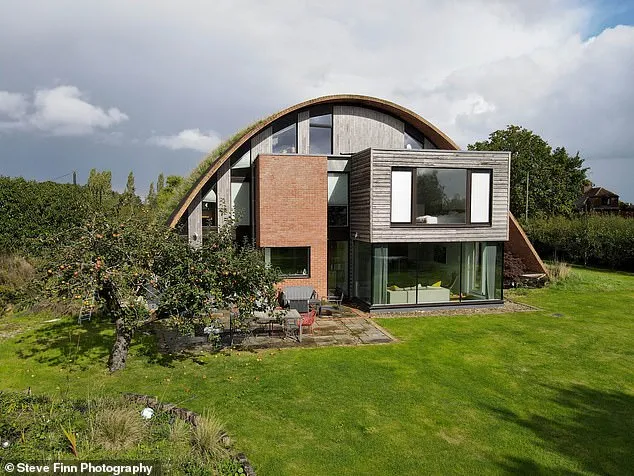 Photo: Grand Designs, via i.dailymail.co.uk
That sofa is still there. It has absorbed ten years of Sunday afternoons, two relationships, one pandemic, and roughly four hundred episodes of Bake Off. It is no longer temporary. It is, in every meaningful sense, permanent. It is also, quietly, one of the most expensive things its owner ever bought — not because of its price tag, but because of everything it cost them to keep pretending otherwise.
Welcome to the placeholder economy.
The Liminal Tier
The placeholder purchase occupies a very specific psychological address. It lives between settling (which sounds defeatist) and aspiring (which sounds healthy), in a comfortable middle ground that British consumers have made entirely their own. We are, as a nation, world-class at the provisional. At the 'for now.' At the thing that is perfectly adequate while we wait for the universe to deliver the thing we actually want.
Psychologists call this goal displacement — the moment when the interim solution quietly becomes the destination. Retailers, who are considerably less interested in your emotional wellbeing than your continued spending, call it something else entirely. They call it a product category.
Because here's the thing about placeholder purchases: they are not accidental. The mid-range watch that's 'fine until I can afford the Rolex.' The entry-level DSLR camera sitting in a bag while its owner waits to 'get serious about photography.' The IKEA bed frame that's 'just until we move somewhere bigger.' These products exist in a deliberately engineered tier — good enough to satisfy immediate desire, not quite good enough to extinguish long-term aspiration. They are, in the most cynical possible reading, a subscription service disguised as a one-off purchase.
The 'For Now' Premium
Here is where the maths becomes uncomfortable. The average British placeholder purchase — according to research from consumer behaviour analysts at the University of Bristol — costs approximately 60% of what the 'real' version would have. Which sounds like a bargain, until you factor in that most people buy both. First the placeholder, then (sometimes, eventually, years later) the actual thing they wanted. At which point they've spent 160% of the original target price, plus the carrying cost of a decade's mild dissatisfaction.
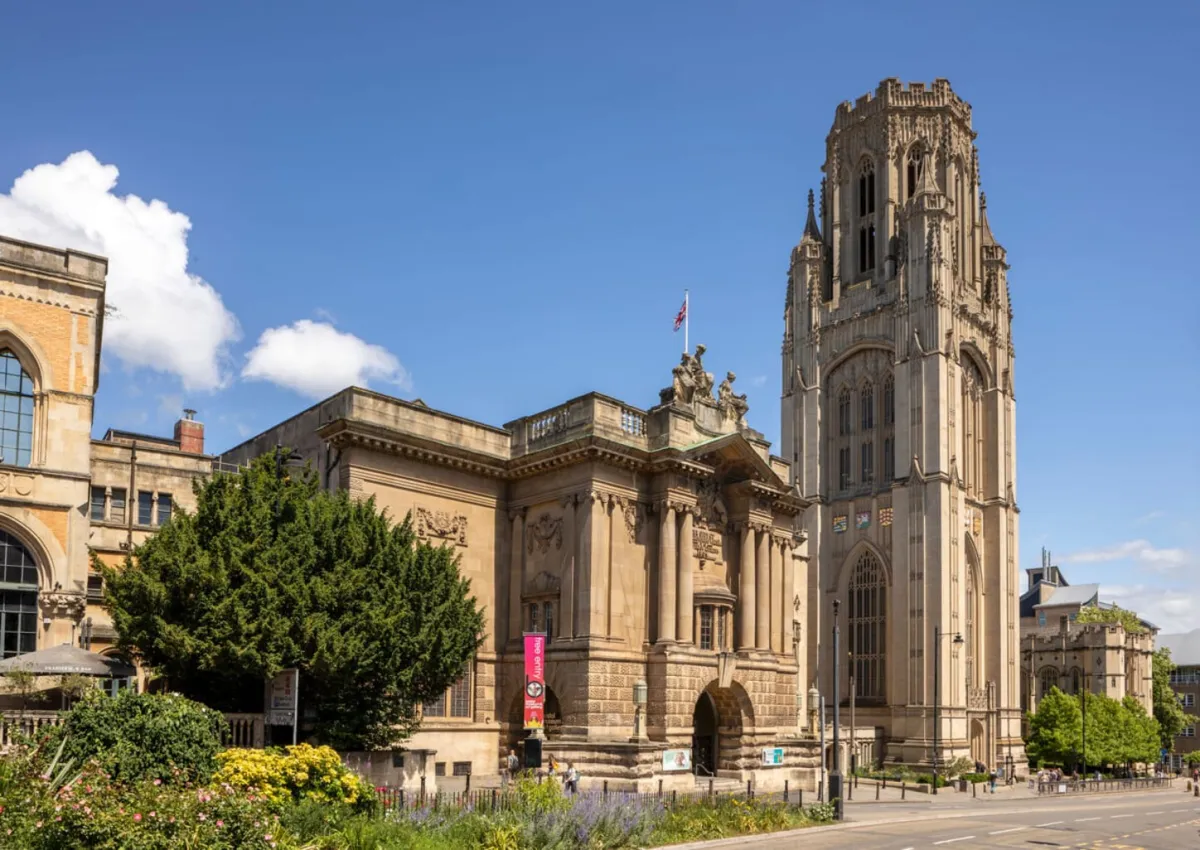 Photo: University of Bristol, via keystoneacademic-res.cloudinary.com
'For now' is, statistically, the most expensive phrase in British retail.
The placeholder mindset also generates a particular kind of cognitive overhead that economists are only beginning to quantify. Every time you look at your placeholder — your temporary kitchen table, your interim coffee machine, your 'good enough' coat — you perform a small psychological calculation. Is this still acceptable? Should I be upgrading yet? Am I the kind of person who owns this, or the kind of person who's about to own something better? That calculation takes energy. It creates a low-grade dissatisfaction that, conveniently, only one thing can resolve.
More shopping.
The Starter Watch Problem
Nothing illustrates the placeholder paradox quite like the British relationship with watches. The horological industry has, over decades, perfected the art of the aspirational entry point — the Seiko that's 'basically as good as a Rolex for most purposes,' the Hamilton that 'holds its value,' the Tissot that 'looks expensive on the wrist.' These are not bad watches. They are, by any objective measure, excellent watches. But they are sold — and bought — with the implicit understanding that they are training wheels. Starter watches. Things you wear while you build toward something with a more impressive provenance.
Except the starter watch almost never gets replaced. It sits on the wrist for fifteen years, accumulating scratches and sentiment, until it becomes impossible to remove — not because of any failure on its part, but because it has become, despite everyone's best intentions, the real watch all along.
Retailers understand this. They understand it so well that many have begun marketing directly to the phenomenon — not the aspiration, but the placeholder itself. 'The watch you'll wear every day,' says the copy, which is doing a lot of work in a very small space.
Engineering the Almost
The most sophisticated placeholder products share a set of carefully calibrated characteristics. They are attractive enough to purchase without embarrassment. They perform their primary function adequately. They contain one or two small but persistent irritants — a drawer that sticks slightly, a strap that's not quite the right width, a colour that's almost right — that keep the aspiration alive without rendering the product unusable.
This is not accidental design. This is precision engineering of a different kind.
Furniture retailers are particularly accomplished at this. The sofa that's a centimetre too narrow. The dining table that seats six 'at a push.' The bed frame that requires a very specific sheet size that's oddly difficult to source. Each minor inconvenience is a gentle reminder that this is not the final version of your life, just a very comfortable approximation of it.
The Sunk Cost Sofa
The reason placeholder purchases become permanent has less to do with satisfaction and more to do with the psychology of sunk costs. Once the beige sofa is in the living room, it has to be actively replaced — a decision that requires energy, money, and the admission that the original purchase was, in some sense, a mistake. British people, who regard admitting mistakes with roughly the same enthusiasm as they regard queue-jumping, find this almost impossible.
So the placeholder stays. And over time, a remarkable thing happens: we stop seeing it as a placeholder at all. It becomes furniture. It becomes background. It becomes, in the most domestic possible sense, ours. The aspiration fades. The 'real' version recedes. And the thing we bought 'for now' becomes the thing we have, forever, which was arguably the plan all along — just not anyone's plan in particular.
The British placeholder purchase is, in the end, a very efficient system. It generates two sales where there might otherwise be one, sustains a permanent low-level consumer anxiety that keeps spending ticking over, and allows its owner to maintain the comfortable fiction that they are still, technically, on the way to something better.
They are not on the way to something better. They are sitting on a beige sofa watching Bake Off.
And honestly? It's fine. It's fine for now.