Ghosts in the Checkout: The Strange Economics of Buying Back Your Own Past
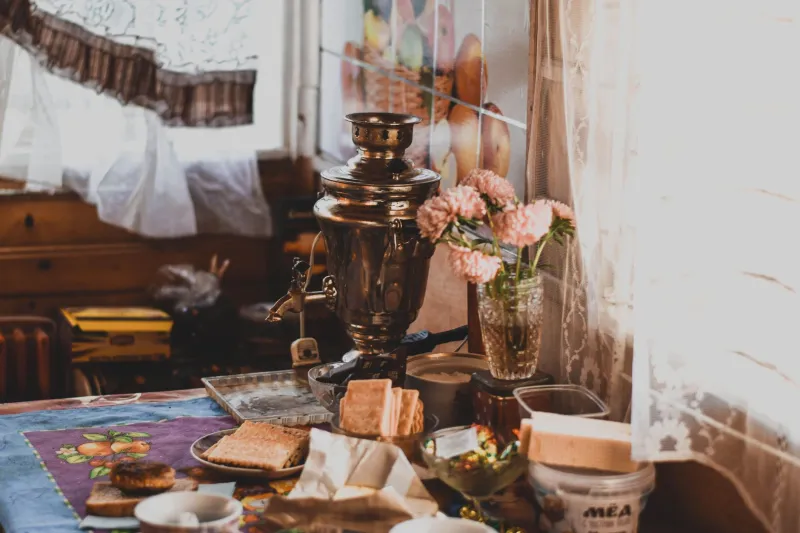
There is a particular kind of madness that visits the British consumer sometime around their late thirties. It arrives quietly, usually via a lifestyle magazine or a well-lit Instagram reel, and it whispers something irresistible: you used to own this. Not this exact item, perhaps. But something very much like it. Something your nan kept on the kitchen counter. Something that sat, unremarkable and beloved, in the corner of a childhood home until someone — possibly you — declared it obsolete and sent it to the charity shop.
Now it costs £65. And you want it desperately.
Welcome to the nostalgia economy, Britain's most elegantly constructed emotional trap.
The Charity Shop Pipeline
The mechanics are almost comically straightforward once you spot them. An object — let's say a particular style of ceramic mixing bowl, the sort that came in graduated sizes and lived in every kitchen from 1965 to 1993 — falls out of fashion. It gets replaced by something sleeker, more modern, less interesting. The originals migrate to car boot sales, charity shops, and the back of cupboards. A decade passes. Then two.
At some point, a brand — or more likely a very clever marketing department inside a brand — notices that a certain demographic has begun waxing lyrical about these objects online. Not with any great urgency. Just the soft, warm language of people remembering something they liked. The brand responds by producing a 'heritage edition.' It costs four times what the original retailed for. It sells out in a fortnight.
The charity shops, meanwhile, still have the originals. For £2.50.
But here is the thing: you will not buy the one from the charity shop. You will buy the heritage edition. And you will feel, inexplicably, that you have got the better deal.
The Emotional Surcharge
Psychologists call this 'nostalgia-driven consumption,' which is the academic way of saying that memory is a more powerful pricing mechanism than inflation. When we encounter an object associated with a period of our lives that felt safer, simpler, or more coherent — childhood, early adulthood, any era before we understood what a mortgage actually entailed — our brain does something extremely inconvenient. It conflates the object with the feeling. It tells us, with great confidence, that owning the thing will restore some fragment of the experience.
It won't, obviously. The Teasmade will not return you to 1987. The retro record player will not make Sunday mornings feel less administratively demanding. But the anticipation of owning it? That lands with remarkable force. And anticipation, it turns out, is what you're really purchasing.
Brands understand this with surgical precision. The word 'heritage' in a product description functions as a kind of emotional override switch. 'Classic.' 'Original recipe.' 'As it was always meant to be.' These phrases do not describe the product. They describe the feeling the product is being sold to deliver. You're not buying a biscuit tin. You're buying the specific quality of light in your grandmother's kitchen on a Tuesday afternoon in 1991.
The Reinvention Racket
What makes Britain particularly susceptible to all of this is our genuinely complicated relationship with the recent past. We are a nation that simultaneously mocks nostalgia and surrenders to it completely. We will cheerfully roll our eyes at 'Britpop revival nights' while spending £180 on a pair of trainers that were last fashionable when Tony Blair was considered a safe pair of hands.
The reinvention racket works best on things that were never especially aspirational the first time around. Utility objects. Kitchen staples. The kind of things that were simply there, unremarked upon, doing their job. A brand of tinned tomatoes. A particular shape of wine glass. A radio that received two stations and occasionally a Norwegian shipping forecast. These items accrued no particular status during their original lifespan. They were ordinary. And ordinariness, viewed from sufficient distance, becomes charm.
The premium attached to the 'retro' version of these objects is not a premium for quality. In most cases, the quality is identical to the original, occasionally worse. It is a premium for context — the implicit promise that this object belongs to a version of life that was somehow more considered, more tactile, more real than the one you currently inhabit.
The Grandparent Paradox
There is a particularly British irony buried in all of this. The generation that actually owned these objects — that used the Teasmade daily, that kept the mixing bowls until they chipped, that listened to the transistor radio without any sense that it was aesthetically significant — did not consider them special. They were just things. Useful things, yes. But not things worth fetishising.
It is their grandchildren, armed with disposable income and a vague existential unease, who have decided these objects deserve reverence. And who are paying, accordingly, for the privilege of that reverence.
Your nan got the mixing bowl free with a magazine subscription. You paid £40 for a 'limited run artisan reissue.' She would find this absolutely hilarious. She would also, if she were honest, be quietly pleased that her taste had been vindicated by history.
What We're Actually After
None of this is irrational, exactly. The desire to anchor yourself to something tangible, something that connects you to a past that felt more navigable, is entirely human. In a consumer landscape defined by the ephemeral — subscriptions, downloads, things that exist only as long as a company continues to feel like maintaining the server — there is something genuinely appealing about an object with a history. Something that has already proved it can last.
The nostalgia economy understands this. It just charges you for it.
So next time you find yourself reaching for the 'heritage edition' of something your parents owned, it's worth pausing for a moment. Not to talk yourself out of it — life is short, and the mixing bowl is lovely. But just to acknowledge what's actually happening. You are not buying a kitchen accessory. You are purchasing a small, expensive piece of emotional time travel.
The only question is whether the destination is worth the fare.