The Virtuous Rummage: Britain's Elaborate Self-Deception About Charity Shop Gold
There is a very specific face that British people make when they find something good in a charity shop. It is not quite joy and not quite triumph, though it contains elements of both. It is the face of someone who has simultaneously saved money, helped a charitable cause, rescued a garment from landfill, and proven themselves to be a person of superior discernment — all in a single transaction that cost £4.50.
This face. This magnificent, self-satisfied, entirely justified face. Britain has been wearing it a lot lately.
The charity shop has undergone a transformation so complete that it barely resembles its former self. What was once a slightly apologetic institution — a place you visited when money was short and left quickly before anyone you knew spotted you — is now a cultural destination, a sustainable lifestyle choice, a content category, and the sort of thing people mention at dinner parties not with embarrassment but with the particular pride of someone who has found a more enlightened way to live.
Welcome to the era of the virtuous rummage. Shoes off at the door.
The New Language of Secondhand
First, the vocabulary. Because the vocabulary tells you everything.
We do not, in 2024, say we bought something secondhand. We say we found it. The distinction is crucial. Finding implies serendipity, taste, an almost archaeological instinct for quality buried beneath the surface. Buying secondhand implies you needed to save money, which is still, despite everything, a slightly uncomfortable thing to admit in public.
We do not say the previous owner got rid of it because it didn't fit or they were bored of it or it had a small stain on the lining. We say it was 'pre-loved.' We say it has provenance. We say, if we are feeling particularly creative, that it has 'a story,' which it does — the story being that someone in Chiswick decided they'd never actually wear it and dropped it off on a Tuesday morning.
And we do not say we bought a secondhand blazer. We say we found a 'proper vintage' piece. The word vintage is doing extraordinary structural work here, bridging the gap between 'someone else's cast-off' and 'curated fashion artefact.' A blazer from 2003 is not old. A blazer from 2003 discovered in an Oxfam in Margate is, apparently, vintage.
The Economics of the Treasure Hunt
Here is a thing that is true and slightly funny: the charity shop regular will spend two hours hunting for a £3 scarf and feel better about this transaction than if they had walked into a shop and bought a scarf for £15 in three minutes.
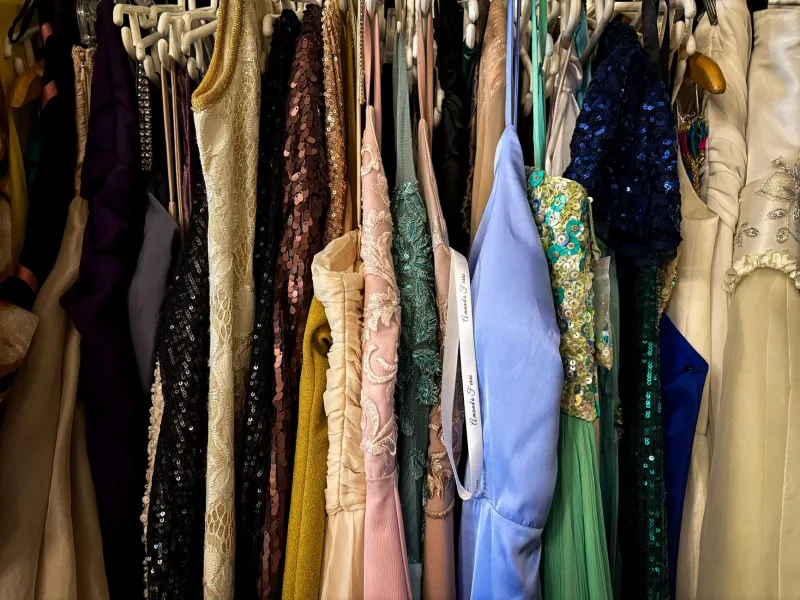
This is not irrational, exactly. The hunt is genuinely enjoyable. There is a pleasure in the rummage that has nothing to do with the object at the end of it — the possibility of each new rail, the slight thrill of not knowing what you'll find, the very particular satisfaction of pulling something good from a context that promised nothing. It is, in miniature, the pleasure of a lucky dip for adults who would never admit to enjoying a lucky dip.
But the economics are interesting. Factor in the time spent, the travel, the parking, the two charity shops you visited before this one, and the £3 scarf becomes considerably less of a bargain. This is not a calculation that the charity shop enthusiast makes, because the hunt is the point. The bargain is the excuse. Nobody drives across town and spends an afternoon rifling through other people's wardrobes purely because they need a scarf.
The Guilt Exemption
What the charity shop offers, above all else, is a guilt exemption — and this is where it becomes genuinely interesting from a psychological standpoint.
Britain has a complicated relationship with shopping. We love it, obviously. We love it rather a lot. But we also feel, with increasing urgency, that we probably shouldn't — that fast fashion is destroying the planet, that consumption is out of control, that perhaps we have enough things. This creates a tension that needs resolving, and the charity shop resolves it beautifully.
The secondhand purchase is not consumption in the problematic sense. It is rescue. It is recirculation. It is, if you're telling the story correctly, practically an act of environmental activism. You did not buy a coat. You saved a coat from landfill. You are not feeding a system of overproduction. You are opting out of it. The fact that you have now acquired another coat is, in this framing, essentially beside the point.
This is the mental gymnastics, and it is performed with such fluency and conviction that it barely registers as gymnastics at all. It has simply become the way charity shopping is understood — by the people doing it, by the culture surrounding it, and increasingly by the charity shops themselves, who have learned to speak this language back to us with considerable skill.
The Hierarchy of the Find
Not all charity shop discoveries are equal, and there is a strict, unspoken hierarchy that governs how excited you are allowed to be about what you've found.
At the bottom: anything from a high street brand, regardless of condition. This is acceptable but earns no particular glory. In the middle: something from a 'better' brand that retailed for significantly more than you paid. This is satisfying. You tell people. At the top: something genuinely old, genuinely good, and — critically — something that requires knowledge to appreciate. The 1970s Burberry mac. The actual Harris Tweed. The pottery that turns out to be by someone who matters.
This top tier is the holy grail, and its value lies almost entirely in the story it tells about the person who found it. Not just 'I saved money' but 'I have the eye.' Not just 'I bought something secondhand' but 'I recognised something others missed.' The charity shop, at this level, becomes a test of cultural literacy, and passing it is enormously satisfying.
The Gentrification Nobody Mentions
There is a less comfortable conversation sitting beneath all of this, which is that the charity shop's transformation into a destination has had consequences. Prices in many shops, particularly in areas with high footfall and a fashion-conscious clientele, have risen considerably. The £1 paperback and the 50p mug are increasingly rare. The shops know what they have, because they have learned from the people who come in looking for it.
This is not anyone's fault, exactly. It is simply the market working as markets do. But it does mean that the charity shop, once a genuinely democratic institution, has developed its own version of gentrification — one in which the people who need cheap clothes compete for rail space with people who want the experience of finding cheap clothes.
Nobody at a dinner party mentions this part.
The Find Is the Point
None of which is an argument against charity shopping. It is, on balance, genuinely good — for the charities, for the garments, for the planet in the modest but real way that buying less new stuff tends to be.
But the story Britain tells itself about why it does it is worth examining. We do not queue outside a vintage market at 8am in November because we are concerned about textile waste. We do it because the hunt is thrilling, because the find is satisfying, because the story we get to tell afterwards — about the eye, the luck, the singular discovery — is worth more to us than whatever we paid.
The virtuous element is real. But it arrived after the want, not before it.
And the want, as always, is the interesting part.