The Weighted Carrier Bag Theory
There's a particular heft to a John Lewis carrier bag that has nothing to do with its contents. It's the weight of institutional reliability, of customer service promises that span decades, of the unspoken guarantee that if anything goes wrong, someone will sort it out with minimal fuss and maximal politeness.
 Photo: John Lewis, via media.johnlewiscontent.com
This isn't shopping – it's emotional insurance. We're not just buying products; we're purchasing peace of mind, one weighty receipt at a time.
In an increasingly uncertain world, certain British retailers have evolved beyond mere commerce into something approaching emotional infrastructure. They're the commercial equivalent of the NHS – institutions we trust to be there when we need them, staffed by people who won't make us feel stupid for not understanding thread counts.
The Reassurance Premium
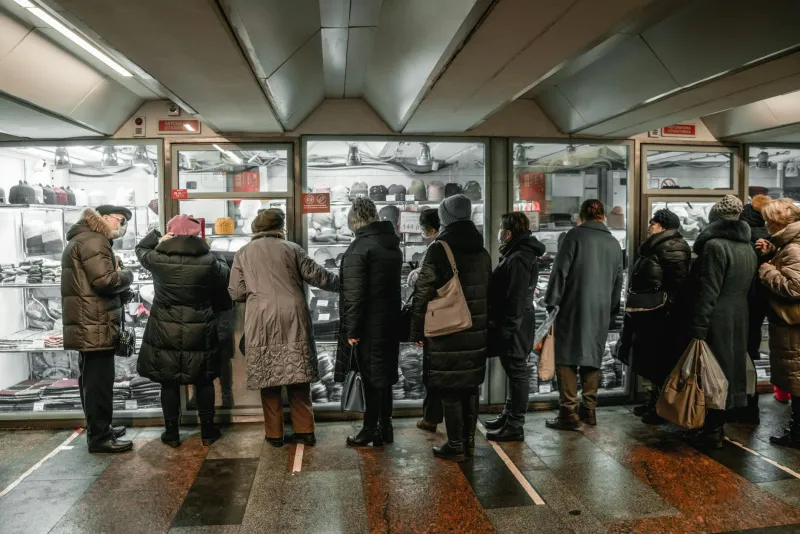
Walk into any John Lewis and observe the customers. They're not just browsing; they're conducting a ritual of financial therapy. The careful consideration of warranty options, the respectful consultation with sales assistants who seem to genuinely care about your duvet preferences, the ceremonial presentation of the receipt – it's all part of an elaborate performance designed to make spending money feel like responsible adult behaviour.
We pay handsomely for this service. A basic white cotton sheet set might cost £40 at Primark and £140 at John Lewis. The thread count might be marginally higher, but what we're really paying for is the feeling that we've made a sensible, grown-up decision that Future Us will thank us for.
It's the retail equivalent of private healthcare – technically unnecessary, but psychologically essential for anyone who's ever been kept awake at night by consumer anxiety.
The M&S Comfort Zone
Marks & Spencer occupies a unique position in the British psychological landscape. It's where we go when we want to feel like responsible adults without the intimidation factor of actual luxury retail. The sandwiches are reliably good, the pants are sensibly practical, and the staff treat you like a competent human being rather than a potential shoplifter.
 Photo: Marks & Spencer, via cdn.cliqueinc.com
There's something deeply comforting about M&S's commitment to being aggressively fine. Not exciting, not cutting-edge, just reliably, reassuringly adequate. In a world of fast fashion and planned obsolescence, M&S promises that your cardigan will outlive your mortgage.
This reliability comes at a premium that has nothing to do with manufacturing costs and everything to do with anxiety management. We're paying for the certainty that our purchase decisions won't come back to haunt us at 3am.
The Receipt as Emotional Artifact
The most telling evidence of comfort shopping psychology lies in how we treat receipts from certain retailers. A Primark receipt gets binned immediately, but a John Lewis receipt gets filed away like a legal document. It's not just proof of purchase – it's a contract with the future, a promise that someone, somewhere, will take responsibility if things go wrong.
These receipts function as emotional talismans. They're physical evidence that we've made prudent choices, that we're the sort of people who invest in quality and think long-term. Never mind that we'll probably lose the receipt within six months – its psychological work is done at the point of purchase.
The act of carefully folding and filing away a receipt from a 'good' shop is a ritual of self-congratulation. We're not just organising paperwork; we're curating evidence of our own good judgment.
The Institutional Hug
What these retailers understand, consciously or otherwise, is that modern shopping anxiety runs much deeper than simple purchase decisions. We're overwhelmed by choice, paralysed by the possibility of making the wrong decision, and exhausted by the constant pressure to be informed consumers.
Comfort retailers offer something precious: the abdication of choice anxiety. Their sales assistants don't just sell products; they provide expert validation of our decisions. When a John Lewis home consultant tells you that Egyptian cotton is worth the extra cost, you're not just getting product information – you're receiving professional absolution for spending more money.
This is customer service as therapy, retail as emotional support. We're paying for someone else to take responsibility for our consumption choices, to assure us that we're doing the right thing.
The Never Knowingly Undersold Psychology
John Lewis's famous price promise – 'Never Knowingly Undersold' – is a masterclass in anxiety management. It's not really about competitive pricing (how would you ever verify it anyway?). It's about removing the nagging worry that you might be getting ripped off.
The promise functions as a cognitive security blanket. Even if you never invoke it, knowing it exists eliminates a major source of post-purchase anxiety. You don't need to spend hours comparison shopping because John Lewis has essentially promised to do it for you.
It's brilliant psychological positioning: pay our prices and never worry about money again. Well, never worry about whether you're paying too much, anyway.
The Aspirational Safety Net
Perhaps most interestingly, comfort shopping isn't just about avoiding negative outcomes – it's about ensuring positive social outcomes. Shopping at certain retailers signals to ourselves and others that we're responsible, discerning consumers who make thoughtful decisions.
A Waitrose receipt in your bag isn't just evidence of grocery shopping; it's proof of membership in a particular socioeconomic tribe. The premium you pay for shopping there isn't just for better food – it's for the social reassurance that you're the sort of person who shops at Waitrose.
This aspirational element transforms comfort shopping from defensive behaviour into identity construction. We're not just buying products; we're buying membership in an imagined community of sensible, middle-class consumers who never have to worry about customer service failures.
The Emotional Infrastructure Economy
What's remarkable about comfort retailers is how they've monetised anxiety itself. They've identified a market gap – the space between discount retailers that make you feel cheap and luxury retailers that make you feel inadequate – and filled it with institutional warmth.
They're selling something that doesn't technically exist: the feeling of making the right choice. It's perhaps the most British product ever invented – reassurance packaged as retail therapy, anxiety management disguised as customer service.
In an uncertain world, we're willing to pay premium prices for the illusion of certainty. And frankly, given the state of everything else, it might be the best money we ever spend.