The Spare Room Changing Room: Britain's Three-Size Habit and the Cost of Maybe
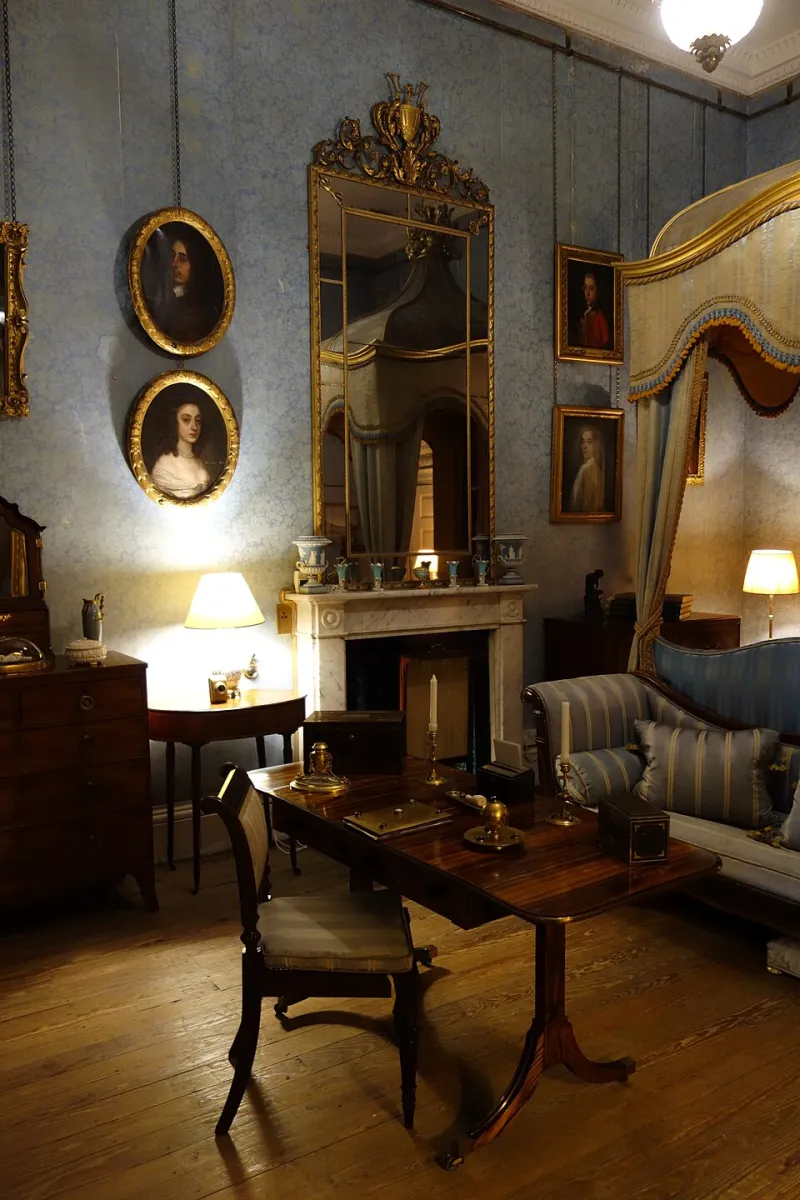
Photo: Daderot, Public domain, via Wikimedia Commons
The spare bedroom in Britain has quietly changed job. It is no longer a place for ironing boards, Christmas decorations and a guitar you mean to learn. It is a changing room with a bed in it. On the floor: three sizes of the same coat, two colours of a dress you are not sure about, and a pair of boots that looked decisive online and faintly threatening in person.
This is bracketing. You order the plausible range, try it on at home, keep the one that works and send the rest back. In theory, it is efficient. In practice, it is a national habit disguised as a shopping method. The spare room has become the place where desire is allowed to audition.
The bedroom becomes a fitting room
The appeal is obvious. Shop lighting is a cruel novelist. A communal mirror is a jury. At home, you can walk about, sit down, check whether the sleeves annoy you and see how the thing looks beside your actual life rather than beside a carefully styled mannequin. The bedroom fitting room offers privacy, better light and the chance to pretend you are the sort of person who owns a steamer.
But bracketing is not really about fit. It is about the gap between wanting and choosing. Choosing is final. Wanting is lovely. Ordering three versions of the same item keeps you in the lovely part for longer. You are not indecisive; you are conducting research. You are not spending; you are exploring. This is the science of wanting dressed as logistics.
How free returns rewired the want
For years, free returns taught Britain a dangerous lesson: desire need not be permanent. You could want something, have it delivered, live with it for a week and then decide the whole thing was a passing fancy. The cost of changing your mind was not zero, but it was hidden in the price of everything else.
That arrangement was generous to the point of being psychologically reckless. It turned the wardrobe into a rolling exhibition. It made the parcel shop a second front door. It encouraged the belief that every purchase came with an undo button, and that the only real commitment was to the delivery slot.
Then the fees crept back. Retailers began charging for returns, or for the label, or for the privilege of sending something back to a warehouse in the Midlands. The party is not over, but the bouncer has started checking names. In 2026, the phrase 'free returns' is increasingly followed by an asterisk the size of a sofa.
The pile of maybe
The pile of maybe is not just clutter. It is a physical record of postponed decisions. Each parcel represents a version of you that might have worked: the version in the smaller size, the version in olive, the version who wears a slightly more interesting coat to the supermarket. Returning it is an admission that only one version gets to go forward.
That is why the pile lingers. Taking it to the parcel shop requires a small act of self-definition. You have to say: this is not me, or not now, or not at this price. The spare room, being out of sight, is happy to hold that conversation indefinitely.
What the returns counter knows
The returns counter is where the dream meets the barcode. It is also where the hidden cost shows up: the van journeys, the repackaging, the labour, the unsold stock, the environmental bill that never appears on the receipt. Bracketing feels personal, but it is a system. It works because the system made it easy, and then made it normal.
The tightening of return fees is not a moral correction so much as a behavioural nudge with a receipt attached. When sending something back costs £2.95, you suddenly become a more decisive person. You read the size guide. You measure the sleeve. You ask yourself whether you actually want the thing or merely enjoy the idea of having ordered it.
The new etiquette of maybe
The likely future is not an end to bracketing but a refinement of it. Britain will still order two sizes, but with a slight wince. We will become canny about return policies the way we became canny about delivery charges. The spare room will remain a changing room, but the pile will get smaller, and the excuses will get better.
Which is probably healthy. Wanting is not the same as needing, and choosing is not the same as losing. The spare room has been a wonderful place to postpone that lesson. But eventually, someone has to take the parcel back, keep the coat, and admit that the version of you in the mirror is the one you are actually stuck with.