The Hedonic Treadmill of Tesco
It starts innocently enough. You're in the cleaning aisle, reaching for your usual own-brand washing-up liquid when you notice it's out of stock. "Just this once," you think, grabbing the Fairy bottle with its promises of "long-lasting bubbles" and "gentle on hands." Three weeks later, you're standing in the same aisle, staring at the own-brand bottle like it's personally insulted your mother. You've been Fairy-pilled, and there's no going back.
This is the hedonic treadmill in action—the psychological phenomenon that explains why lottery winners aren't necessarily happier than the rest of us, and why your first taste of proper coffee ruins instant granules forever. Once we've experienced a higher standard, our brains recalibrate their baseline expectations faster than a GPS finding a new route. What was once perfectly adequate suddenly feels like cruel and unusual punishment.
The Neuroscience of Never Again
Dr Michael Chen, a behavioural economist at the London School of Economics, has spent five years studying what he calls "quality lock-in"—the irreversible consumer journey from budget to premium. His research reveals that the brain's reward pathways don't just register the difference between products; they actively resist returning to previous standards.
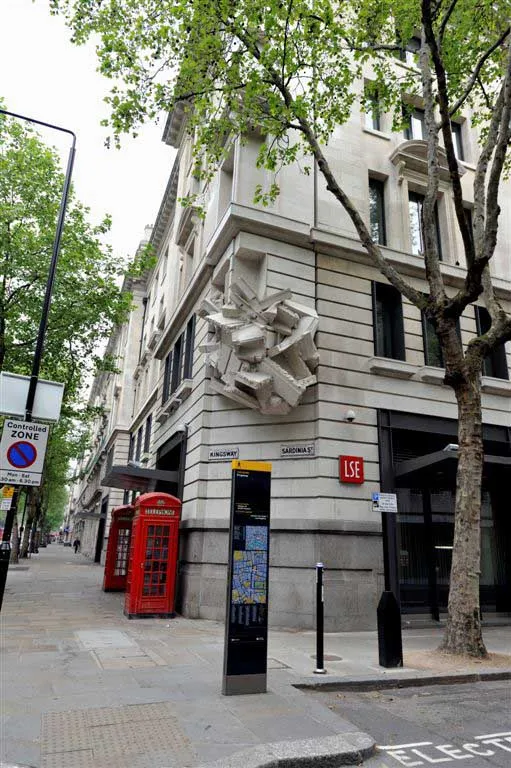 Photo: London School of Economics, via www.e-architect.com
"It's not just about taste or performance," Chen explains. "Once you've experienced what you perceive as 'better,' your brain literally rewrites its definition of 'normal.' The £3 bottle of wine that was perfectly drinkable last year becomes undrinkable after you've tried the £15 bottle. It's not snobbery—it's neuroscience."
This neural rewiring explains why Britain's supermarkets have seen a steady migration from value ranges to premium lines, even during economic downturns. We're not just buying products; we're buying our way out of our own lowered expectations.
The Toilet Roll Revelation
Nothing illustrates the impossibility of downgrading quite like Britain's relationship with toilet paper. Once you've experienced the cloud-like embrace of four-ply luxury, returning to the scratchy reality of budget bog roll feels like a personal affront to your dignity.
Sarah, a 42-year-old accountant from Manchester, describes her own toilet paper journey with the gravitas of someone recounting a religious conversion: "I bought the expensive stuff during lockdown as a treat. Now I can't go back. I've tried—I stood in the loo roll aisle for twenty minutes trying to convince myself that paper is paper. But it's not. Once you know what soft feels like, rough becomes unbearable."
Andrex reports that customers who upgrade to their premium range show a 94% retention rate—higher than most mortgage providers. We're more loyal to our toilet paper than our banks.
The Supermarket Hierarchy of Needs
British supermarkets have inadvertently created a psychological experiment in class mobility through their tiered product ranges. Value, standard, premium, finest—each level represents not just a price point but a lifestyle aspiration. Moving up the tiers feels like social advancement; moving down feels like failure.
This hierarchy has created what retail psychologists call "the ratchet effect"—consumers who naturally drift upward through the tiers but find it psychologically painful to move down. Tesco's data shows that customers who regularly buy Finest products will sooner switch supermarkets entirely than downgrade to Value ranges.
"It's about identity," explains retail consultant James Parker. "Your shopping basket becomes a statement about who you are. Downgrading doesn't just feel like saving money—it feels like admitting defeat."
The Coffee Catastrophe
Nowhere is the upgrade trap more evident than in Britain's coffee culture. The journey from instant to beans is a one-way street paved with good intentions and littered with abandoned jars of Nescafé.
Mark, a software engineer from Bristol, charts his own coffee evolution with the precision of a military campaign: "Started with Gold Blend, moved to cafetière, then got a proper machine. Now I grind my own beans and have strong opinions about extraction times. I tried going back to instant during a particularly skint month and it was like drinking brown water. I'd rather have no coffee than bad coffee."
This isn't just about caffeine—it's about the irreversible education of the palate. Once you've tasted what coffee can be, anything less feels like a betrayal of your own standards.
The Artisanal Avalanche
The artisanal food movement has weaponised the upgrade trap, creating products specifically designed to spoil us for mass-market alternatives. Proper butter ruins margarine forever. Craft beer makes Carling taste like sadness in a can. Fresh pasta transforms dried spaghetti into a punishment meal.
Delicatessen owner Emma Watson has observed this transformation in her customers: "People come in for one fancy cheese as a treat, then gradually their entire shopping list evolves. Six months later, they're the person who can't eat supermarket cheddar without wincing. We've created cheese snobs, and they can never go back."
The Economics of Impossible Downgrade
The upgrade trap has significant economic implications for British households. Research from the Institute for Fiscal Studies suggests that "lifestyle inflation"—the tendency for spending to increase with income and stay elevated even when income falls—is largely driven by this inability to downgrade quality expectations.
Families who've experienced premium products during good times find it psychologically difficult to return to budget alternatives during lean periods. The result is often increased debt rather than decreased standards—we'd rather borrow money than admit our expectations were unrealistic.
The Subscription Trap
The subscription economy has perfected the art of making downgrades feel impossible. Netflix's viewing algorithms ensure you never quite remember what life was like before unlimited streaming. Spotify makes radio feel primitive and limiting. Amazon Prime transforms regular delivery speeds into a form of medieval torture.
These services don't just provide convenience—they provide a new definition of normal. Cancelling them doesn't feel like saving money; it feels like voluntary exile to a less civilised era.
The Psychology of Permanent Improvement
Perhaps the most fascinating aspect of the upgrade trap is how it reveals our relationship with progress itself. We've collectively decided that moving backwards—even to a perfectly adequate previous standard—is psychologically unacceptable. This isn't just about products; it's about our fundamental belief that life should continuously improve.
This mindset has created a culture of perpetual dissatisfaction disguised as high standards. We're never quite content with what we have because we're always aware of what we could have. The upgrade trap isn't just about washing-up liquid or toilet paper—it's about the impossibility of ever being satisfied in a world of infinite improvements.
Learning to Love the Ladder
The upgrade trap might be inescapable, but perhaps that's not entirely bad news. Our inability to downgrade has driven innovation, improved quality across entire industries, and created a culture where "good enough" genuinely isn't good enough. We're a nation that demands better, even when we can't afford it—and sometimes that's exactly the motivation we need to find a way to afford it after all.