The Archaeology of Aspiration
Climb into any British loft today and you'll discover something remarkable: a perfectly preserved record of who we thought we were going to become. There's the bread maker from 2019 ("I'll be the sort of person who makes fresh loaves"), the exercise bike from lockdown ("I'll emerge fitter and stronger"), and that gorgeous coat from Zara that cost a fortune but makes you look like a Victorian governess ("I'll develop the confidence to pull this off").
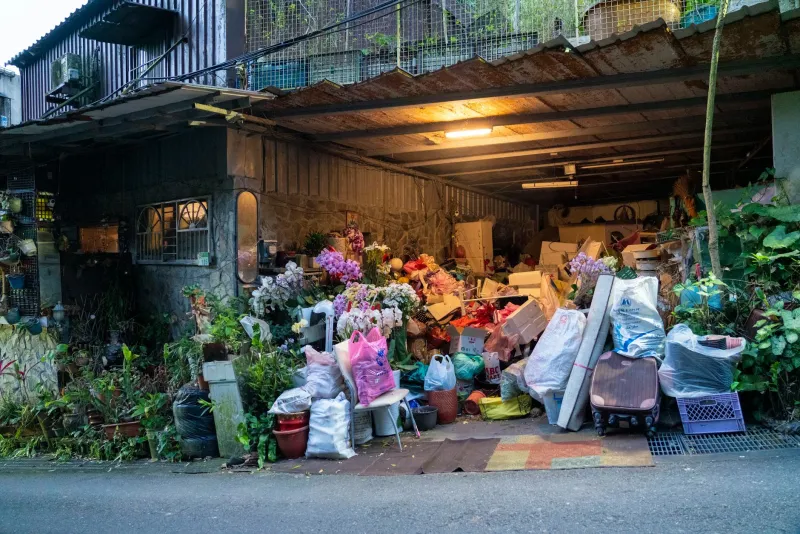
We are a nation of accidental curators, tending to collections we never meant to start. Our spare rooms have become shrines to deferred dreams, and our lofts house more abandoned hobbies than the V&A has actual exhibits.
The Purgatory of 'Too Good'
The British relationship with unwanted possessions is uniquely tortured. Unlike our American cousins, who'll happily donate last season's trainers to charity, or the French, who seem capable of elegant minimalism, we exist in a perpetual state of "but it's too good to throw away."
This phrase – the unofficial motto of British storage – reveals something profound about our national psyche. We're not hoarders in the clinical sense; we're optimistic procrastinators. That juicer gathering dust? It's not rubbish, it's potential. Those books on learning Spanish? They're not clutter, they're future selves waiting to happen.
Behavioural economists call this the "endowment effect" – our tendency to value things more highly simply because we own them. But in Britain, we've elevated this to an art form. We don't just overvalue our possessions; we overvalue our capacity for reinvention.
The Great British Storage Paradox
Walk through any British high street and you'll notice something peculiar: storage shops everywhere. IKEA built an empire on our need for boxes, baskets, and clever compartments. We're so committed to keeping things we don't use that we'll buy more things to store them in.
It's a beautifully circular economy of denial. We purchase organisational solutions for problems we've created by refusing to admit we don't want something anymore. Those clear plastic boxes aren't storage systems; they're life support machines for dead relationships with objects.
Consider the psychology here: we'd rather spend £30 on storage containers than admit that £300 stand mixer was a mistake. It's cheaper to warehouse our poor decisions than confront them.
When Wanting Becomes Haunting
The objects in our spare rooms aren't just taking up space; they're taking up emotional bandwidth. Every time we glimpse that guitar case in the corner, there's a micro-moment of guilt. Every Christmas when we rearrange decorations around the exercise equipment, we're reminded of who we're not.
These items have transformed from objects of desire into objects of reproach. They're no longer things we want; they're things that want something from us – acknowledgment, use, or release.
Psychologist Dr. Stephanie Sarkis describes this phenomenon as "object guilt" – the emotional weight of unused purchases. In Britain, where politeness extends to our relationship with inanimate objects, this guilt is particularly acute. We can't throw away the bread maker because it might have feelings.
The Marie Kondo Resistance
When Marie Kondo's "spark joy" philosophy swept the world, Britain responded with characteristic scepticism. "Does it spark joy?" felt too binary, too American somehow. We prefer the more nuanced question: "Might it spark joy again if I become a different person?"
This resistance isn't stubbornness; it's hope. Those riding boots from our brief equestrian phase aren't just taking up wardrobe space – they're keeping alive the possibility that we might rediscover our love of horses. The photography equipment gathering dust isn't clutter; it's an insurance policy against future creative drought.
The Economics of Emotional Overhead
What we're really talking about here is the hidden cost of keeping options open. Every item in our personal museums represents not just money spent, but money continuing to be spent – in storage, in mental energy, in the opportunity cost of space.
The average British household stores approximately £3,000 worth of unused items, according to recent surveys. But the real expense isn't financial; it's psychological. We're paying rent on versions of ourselves that no longer exist.
Breaking the Spell
So how do we escape this holding pattern? Perhaps the answer lies in reframing our relationship with waste. Instead of seeing disposal as failure, we might view it as completion. That bread maker didn't fail to make you into a baker; it succeeded in teaching you that you prefer Hovis.
The objects in our spare rooms aren't evidence of poor decision-making; they're proof that we're curious, hopeful humans who try things. The tragedy isn't that we bought them; it's that we won't let them go to find new homes where they might actually spark joy.
The Liberation of Letting Go
There's something profoundly British about turning even decluttering into a form of procrastination. We research the best charity shops, debate the environmental impact of disposal, and create elaborate systems for "maybe" piles. We've made not making decisions into its own hobby.
But perhaps it's time to acknowledge that our spare rooms aren't storage spaces – they're emotional processing centres. And like any good therapist will tell you, sometimes the healthiest thing you can do is say goodbye.
After all, the person who bought that bread maker was trying to tell you something. The least you can do is listen.