The Invisible Hand That Guides Your Basket
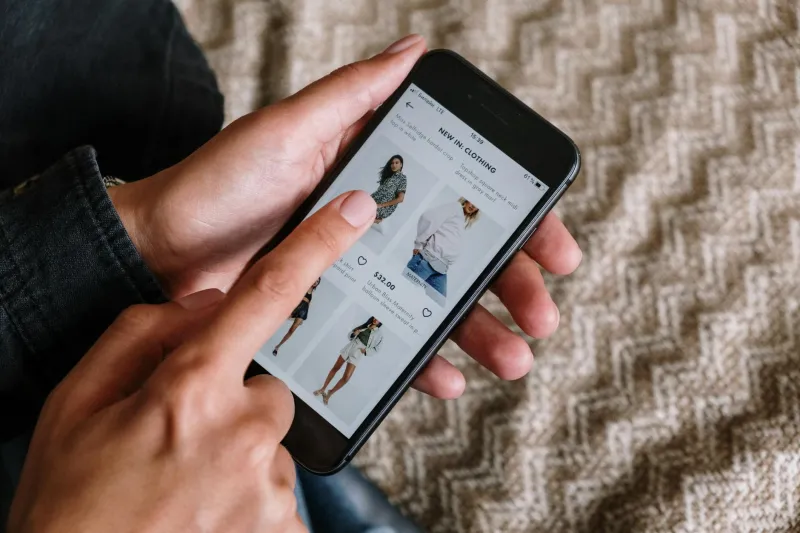
There's something unsettling about opening your favourite shopping app and finding it knows exactly what you want before you do. That jumper you glanced at last week? It's back, front and centre, accompanied by a perfectly coordinated scarf you hadn't considered but somehow desperately need. Welcome to Britain's new reality: shopping in the age of algorithmic omniscience.
We've handed over our deepest desires to lines of code, and they're doing a better job of understanding us than we understand ourselves. The recommendation engine doesn't just suggest products—it manufactures want with the precision of a Swiss watch and the subtlety of a Derren Brown mind trick.
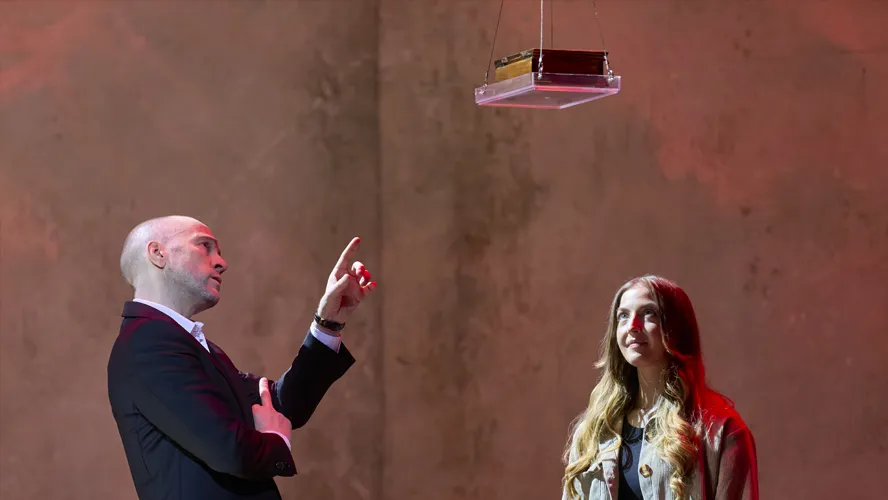 Photo: Derren Brown, via theapollotheatre.co.uk
The Science of Synthetic Craving
Behind every "customers who bought this also bought" prompt lies a sophisticated web of data analysis that would make MI5 weep with envy. Your browsing history, purchase patterns, demographic profile, and even the time you spend hovering over certain items are fed into machine learning models that can predict your next purchase with frightening accuracy.
The algorithm doesn't just know you fancy a new pair of trainers—it knows you're the type who'll spend twenty minutes comparing reviews, abandon your basket twice, then return three days later to complete the purchase. It knows whether you're a "treat yourself" Tuesday shopper or a "payday splurge" Friday buyer. It knows your weakness for limited editions and your susceptibility to free delivery thresholds.
What's particularly British about this phenomenon is how politely we've accepted it. We've collectively agreed to let machines curate our desires with the same resigned acceptance we show to queuing in the rain. "Oh, how clever," we mutter, adding the algorithmically-suggested throw cushions to our basket. "It knows me so well."
The Personalisation Paradox
The irony is delicious: in an age of unprecedented personalisation, we're all becoming remarkably similar. The algorithm's job isn't to celebrate your unique taste—it's to nudge you towards products with the highest profit margins and the greatest likelihood of additional purchases. Your "personalised" recommendations are actually steering you towards a very specific type of consumer behaviour.
Consider the phenomenon of "algorithmic convergence"—when seemingly different people end up with suspiciously similar wishlists. That friend who shares none of your interests but somehow has the same lamp in their Instagram stories? Thank the algorithm. It's identified you both as members of the same consumer tribe: "Urban Professional, Age 28-35, Disposable Income £2,000+, Weakness for Scandi Minimalism."
The algorithm doesn't care about your individual quirks; it cares about your purchasing patterns. It's not interested in your personality—just your spending persona.
When Machines Manufacture Desire
Perhaps the most unsettling aspect of algorithmic shopping is how it creates want where none existed. That targeted ad for a product you've never heard of but suddenly can't live without? That's not coincidence—it's engineered desire, manufactured with the precision of a pharmaceutical company developing addiction.
The algorithm has learned that the most profitable customer is one in a constant state of mild dissatisfaction with their current possessions. It serves up an endless stream of "upgrades" and "improvements" to things you were perfectly happy with yesterday. Your phone case? Apparently, it's "so last season." Your coffee machine? There's a newer model with features you didn't know you needed.
This isn't shopping—it's subscription-based wanting, where your desires are refreshed monthly like a Netflix queue.
The Death of Serendipity
Remember the thrill of discovering something unexpected? That jumper you bought on a whim that became your favourite piece? The algorithm has largely eliminated such accidents. Every suggestion is calculated, every recommendation is strategic. We've traded serendipity for efficiency, and lost a little magic in the process.
The modern British shopper exists in an echo chamber of their own algorithmic reflection. The system shows us more of what we've already shown interest in, creating a feedback loop that narrows rather than expands our horizons. We think we're exploring, but we're actually walking in increasingly tight circles.
Reclaiming Your Digital Autonomy
The question isn't whether algorithms are good or bad—they're simply a tool, like a very sophisticated and slightly manipulative personal shopper. The question is whether we're comfortable outsourcing our desires to a system designed primarily to extract maximum value from our wallets.
Perhaps it's time to occasionally ignore the algorithm's advice. Buy something it would never suggest. Shop in a physical store where the only recommendation engine is your own impulse. Clear your browsing history and watch your suggestions reset to a beautiful, chaotic randomness.
After all, the most interesting people have always been the ones who refuse to be easily categorised. Why should our shopping habits be any different?
The algorithm knows what you want, but it might be worth remembering that sometimes, the most satisfying purchases are the ones no machine could have predicted.