The Moral Mathematics of Preloved
There's a particular species of British shopper prowling the rails of Beyond Retro and scrolling through Vinted with the focused intensity of a forensic accountant. They're performing complex moral mathematics: £180 for a 'vintage' band t-shirt from 1994 equals virtue, while £15 for the same design newly printed equals environmental destruction.
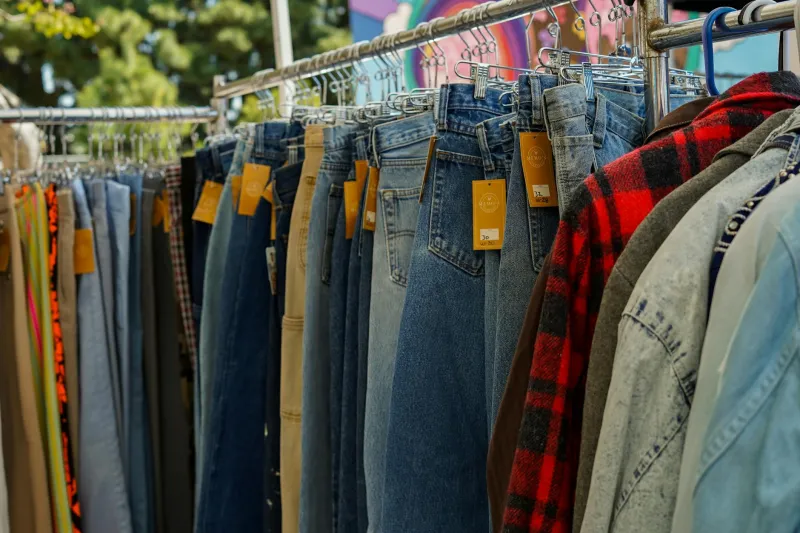
 Photo: Beyond Retro, via www.beyondretro.com
Welcome to the theatre of conscious consumption, where the price tag isn't just about money – it's about morality. We've somehow convinced ourselves that paying more for used goods is both financially savvy and environmentally righteous. It's possibly the most British approach to cognitive dissonance ever invented.
The Vintage Value Proposition
The numbers tell a fascinating story. The UK's secondhand fashion market is now worth £4.3 billion annually and growing at twice the rate of traditional retail. But here's the kicker: average spend per item has increased by 340% over the past five years. We're not just buying secondhand – we're buying premium secondhand.
This isn't your grandmother's charity shopping. This is curated vintage, authenticated preloved, and algorithmically recommended sustainable fashion. We've taken the humble act of buying someone else's unwanted clothes and transformed it into a luxury experience complete with authentication certificates and Instagram-worthy unboxing moments.
The irony is exquisite. In our quest to consume more ethically, we've simply created new categories of expensive things to want.
The Sustainability Status Symbol
Nothing signals middle-class virtue quite like casually mentioning that your £200 'investment piece' came from a charity shop. It's the ultimate humble brag: simultaneously demonstrating good taste, environmental consciousness, and the kind of financial confidence that can afford to gamble on pre-owned luxury.
We've weaponised thrift as a status symbol. The ability to spot a genuine Hermès scarf in a Cancer Research donation bag has become a form of cultural capital. We're not just shopping; we're archaeological treasure hunting with a side order of moral superiority.
But perhaps most tellingly, we've started paying vintage premiums for items that were never particularly special when new. A polyester dress from Topshop circa 2008 becomes a 'Y2K gem' worth three times its original price simply by virtue of having survived long enough to become retro.
The Circular Economy Circus
The language around secondhand shopping has undergone a remarkable transformation. We no longer buy 'used' things; we invest in 'preloved' items. We don't shop at charity shops; we 'treasure hunt' for 'vintage finds.' We've rebranded the entire experience from necessity shopping to lifestyle choice.
This linguistic alchemy serves a crucial psychological function. It allows us to maintain our identity as conscious consumers while still engaging in the fundamental act of buying things we don't strictly need. We're not shopping addicts; we're circular economy participants.
The platforms have cottoned on brilliantly. Depop doesn't sell secondhand clothes; it sells 'unique pieces with stories.' Vinted doesn't facilitate decluttering; it enables 'sustainable fashion choices.' They've turned the environmental crisis into a marketing opportunity, and we're buying it – literally.
The Authentication Anxiety
Perhaps nothing captures the absurdity of luxury secondhand culture quite like the rise of authentication services. We now pay people to verify that our used designer handbags are genuinely used designer handbags rather than fake used designer handbags. It's like insurance for our insecurity, wrapped in a sustainability bow.
This authentication obsession reveals something profound about contemporary consumption anxiety. We're so desperate to ensure our ethical purchases are also status purchases that we've created an entirely new industry around verifying the provenance of other people's discarded belongings.
The psychological gymnastics are remarkable. We want the moral high ground of buying secondhand, but we also want the social validation of buying luxury. Authentication services allow us to have both, for a fee.
The Paradox of Sustainable Splurging
The most delicious contradiction in conscious consumption culture is how it's made spending more money feel environmentally responsible. We've convinced ourselves that buying expensive vintage pieces is an act of environmental stewardship, as if our purchasing decisions could somehow retroactively prevent overproduction.
This has created a fascinating new category of guilt-free splurging. The same person who feels environmentally anxious about buying a new jumper from Uniqlo will happily drop £150 on a 'vintage' Ganni dress from 2019. The moral framework transforms the transaction from frivolous consumption to environmental activism.
We're essentially paying a sustainability premium for the privilege of feeling good about shopping. It's virtue as a luxury service.
The Curation Industrial Complex
Behind the scenes, an entire industry has emerged to feed our appetite for guilt-free consumption. Professional vintage buyers scour charity shops and estate sales, cherry-picking the good stuff before it reaches the rails. What we experience as serendipitous treasure hunting is actually a carefully curated retail experience.
This curation comes at a price – literally. The vintage Levi's jacket that might have cost £8 in a charity shop now retails for £80 in a vintage boutique, complete with a story about its provenance and a guarantee of authenticity. We're paying for the convenience of having someone else do our ethical shopping for us.
It's the commodification of virtue, packaged as individual discovery.
The Future of Guilt-Free Shopping
As traditional retailers scramble to capture the secondhand market with their own 'preloved' platforms, we're witnessing the ultimate corporate co-option of conscious consumption. H&M now operates a clothing rental service. ASOS has launched a vintage marketplace. Even Selfridges has a resale platform.
The revolution has been institutionalised, which raises uncomfortable questions about whether buying secondhand from a corporate platform is meaningfully different from buying new. Are we saving the planet, or just paying more for the illusion of ethical consumption?
Perhaps the real product being sold in the conscious consumption economy isn't clothes at all – it's absolution. We're not buying vintage band t-shirts; we're buying permission to keep shopping in a world where shopping feels increasingly problematic. It's the most expensive form of environmental indulgence ever invented, and business is booming.