Always the Bridesmaid: Britain's Deeply Suspicious Love Affair With the Middle Option
You walked in wanting the small. You left with the medium. And somewhere in a glass-walled office, a pricing strategist is having a very good day. Welcome to the decoy effect — the retail trick that's been picking Britain's pockets since before the self-checkout queue was invented.
It happens in coffee shops, supermarket aisles, cinema foyers, and subscription pages. You're presented with three options. The first is a bit rubbish. The third is aggressively expensive. And the middle one — suspiciously well-priced, conveniently reasonable, practically glowing with reasonableness — is exactly what they wanted you to choose all along.
Congratulations. You've just been Goldilocked.
The Architecture of a Trap
The decoy effect — known in behavioural economics circles as asymmetric dominance — works by introducing a third option that exists not to be bought, but to make another option look better by comparison. It was first formally described by researchers Joel Huber and Christopher Puto in 1982, though shopkeepers had been running the con considerably longer.
Here's a clean example. Imagine a cinema offering a small popcorn for £4.50, a medium for £6.80, and a large for £7.00. Suddenly the large looks like extraordinary value — the medium is the sucker's choice, and the small seems almost insulting. You go large. You didn't plan to. You haven't finished a large popcorn since 2009. But the numbers made it feel inevitable.
The decoy isn't always the small option. Sometimes it's an absurdly overpriced premium tier that exists purely to make the mid-range version feel attainable, almost sensible — the kind of purchase a responsible adult makes. A £12 bottle of wine next to a £28 bottle and a £45 bottle isn't competing with the £45 bottle. It's being validated by it.
Supermarkets Have Been at This for Decades
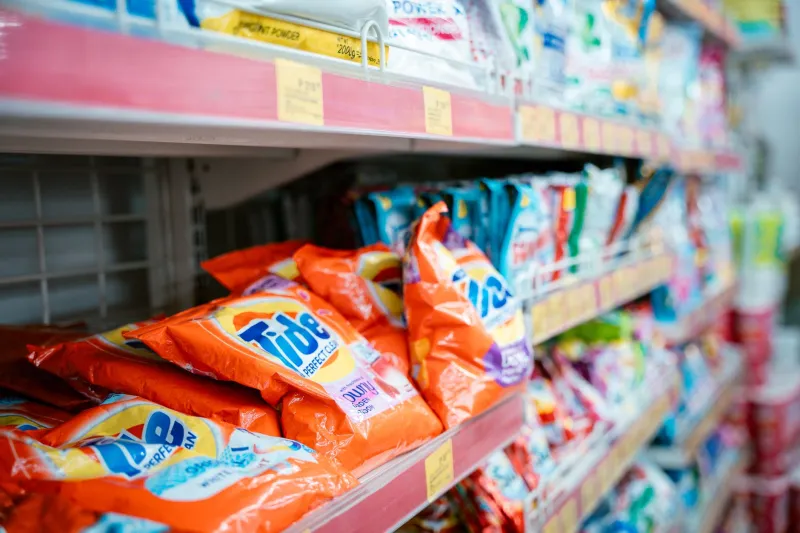
Britain's supermarkets are decoy effect black belts. Every own-brand tier — value, standard, finest — is a masterclass in nudging you one rung up the ladder. The value baked beans are fine. Everyone knows they're fine. But they look a bit bleak next to the standard tin, which looks positively artisanal next to the Finest variety with its tasteful font and implied Suffolk heritage.
You came in for beans. You left with aspirations.
It's not accidental. Category managers at major retailers spend considerable time engineering price architecture specifically to make certain products feel like the obvious, rational choice. The 'good-better-best' framework isn't a consumer service. It's a funnel. And the middle is where the margins live.
Fashion retail does this with particular elegance. The entry-level version of a bag or trainer exists to make the mid-tier feel premium. The ultra-premium version exists to make the mid-tier feel accessible. You're not choosing freely between options. You're being steered down a corridor with the exit already picked out.
The Illusion of Agency
What makes the decoy effect so deliciously devious is that it doesn't feel like manipulation. It feels like good sense. You're not being pushed into anything. You looked at the options, you weighed them up, you made a considered decision. The medium streaming plan. The mid-range hotel room. The 'classic' subscription tier that somehow costs £4 more than the basic one but comes with a feature you'll use twice.
This is the genius of it. Overt pressure creates resistance. Clever architecture creates consent. Behavioural economist Dan Ariely famously demonstrated this with The Economist's subscription options — a print-only subscription priced the same as a combined print-and-digital package made the combined option look like a steal. The print-only option had one job: to exist. It did it brilliantly.
Britain, as a nation that prides itself on not being taken in, on knowing a dodgy deal when it sees one, on harrumphing at salespeople and reading the small print — Britain is spectacularly susceptible to this. Precisely because it doesn't smell like a con. It smells like a bargain.
The Middle Child of the Economy
There's something culturally resonant about Britain's affinity for the middle option that goes beyond mere cognitive bias. We are, temperamentally, a middle-option people. We distrust excess. We distrust austerity. We want things that are decent without being flashy, affordable without being embarrassing. The decoy effect doesn't just exploit a psychological quirk — it exploits a national character.
The premium version feels like showing off. The budget version feels like admitting something. The middle version feels like having your head screwed on. It is, in the most literal sense, the Marks & Spencer of choices.
Retailers understand this implicitly. The mid-tier isn't just profitable — it's emotionally safe. And emotional safety, in a shopping context, is worth considerably more than a loyalty card stamp.
Can You Escape It?
Theoretically, yes. In practice, it requires a level of conscious effort that most of us cannot sustain across an entire shopping trip, let alone a lifetime of them. The trick — such as it is — is to evaluate options in isolation rather than in relation to each other. Ask not 'which of these three is the best value?' but 'would I buy this if it were the only option available?'
That medium popcorn at £6.80 — would you pay £6.80 for popcorn if there were no large sitting next to it for £7.00? Reader, you would not.
But knowing the trick and resisting it are different skills entirely. The decoy effect persists even in people who've been told about it, studied it, and written academic papers about it. Which tells you something rather dispiriting about the gap between understanding a trap and not walking into it.
Somewhere, a pricing strategist is nodding.
You'll be back for the medium.